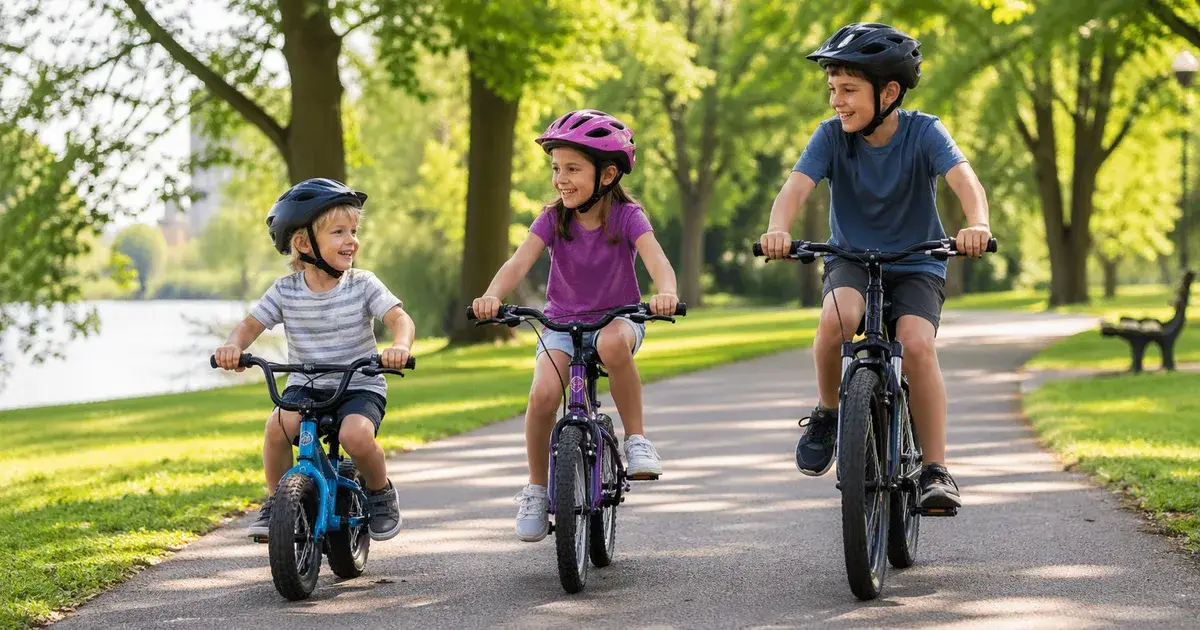
Best Training Wheels 2026 - Sizes, Fitment & Top Picks
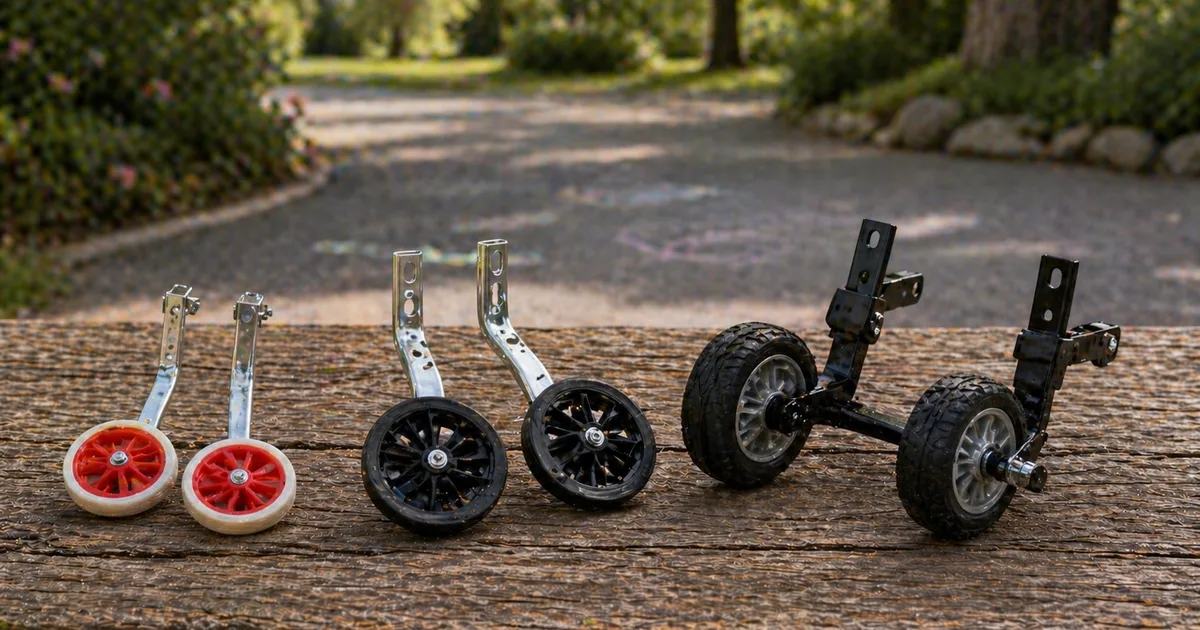
Training wheels are the most-returned cycling accessory we track. Not because they're badly made - because parents buy the wrong size, or buy a generic 'universal' set that doesn't fit their kid's coaster-brake axle, and end up wrestling with hardware in the driveway.
Every set listed here ships with the longer axle bolts, washers, and lock-nuts that kids-bike rear axles actually need - the single most common cause of training wheels falling off mid-ride is reusing the original (too-short) axle nut.
The picks below are sorted by the rear wheel diameter of your child's bike. Match the size, check the axle type (most kids bikes are coaster-brake - easy), and you'll have stabilisers bolted on in under fifteen minutes.
As an Amazon Associate we earn from qualifying purchases. Purchases made through these links help support our free calculators.
Top training wheels at a glance
Our quick picks - full editorial deep dive below.
Joystar
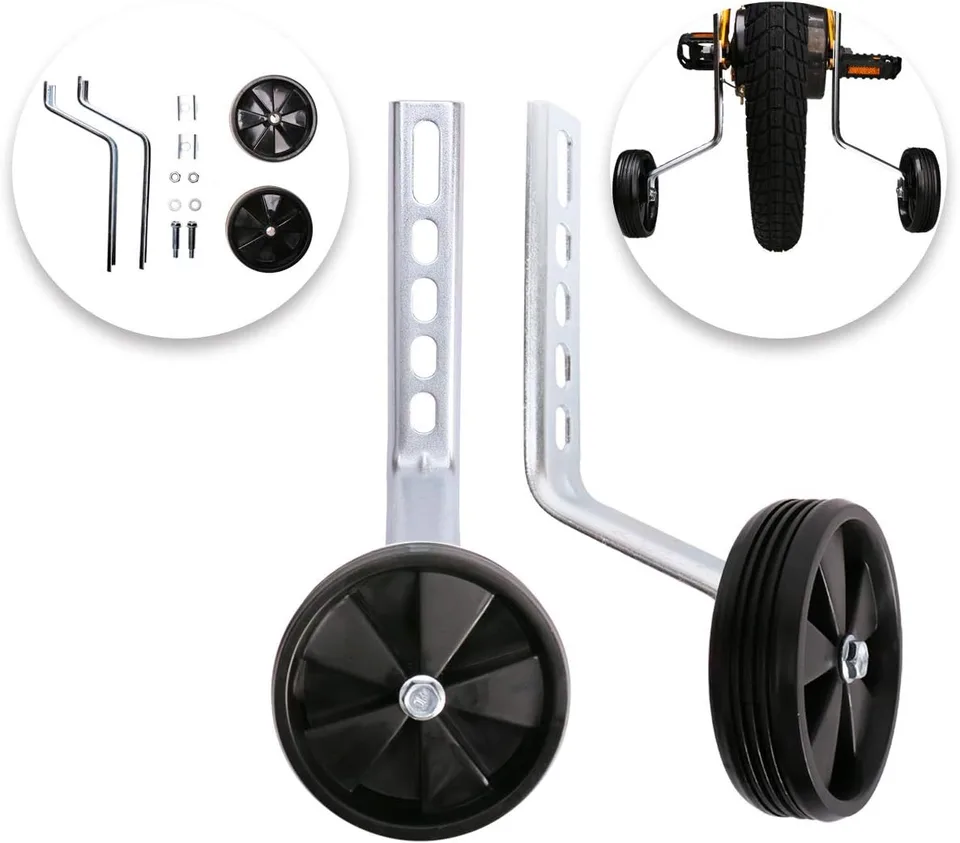
Joystar DRBIKE Adjustable Training Wheels (12-20")
Universal training wheels - adjustable height lets you raise them as your child gets more confident before removing entirely.
Joystar
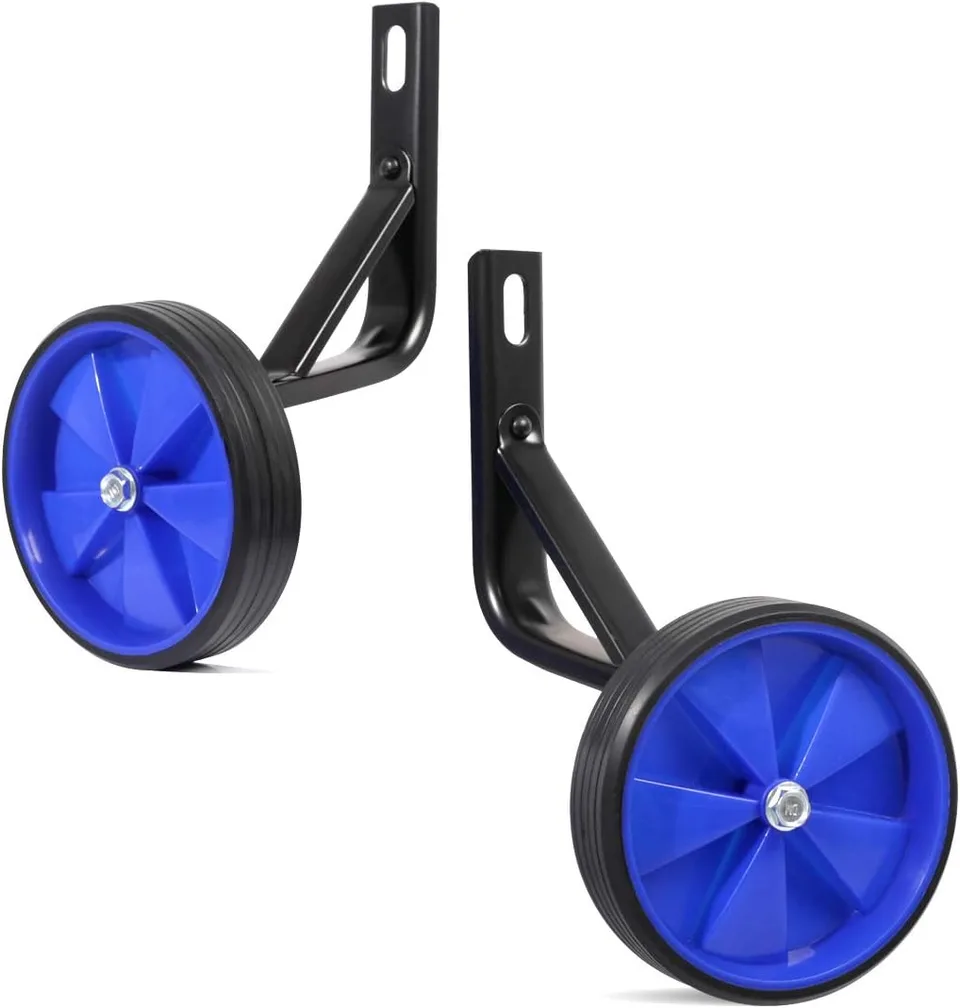
Joystar DRBIKE 14" Training Wheels
Sized specifically for 14" kids bikes. Use only on a flat surface as wheels lower the bike's ground clearance.
Joystar
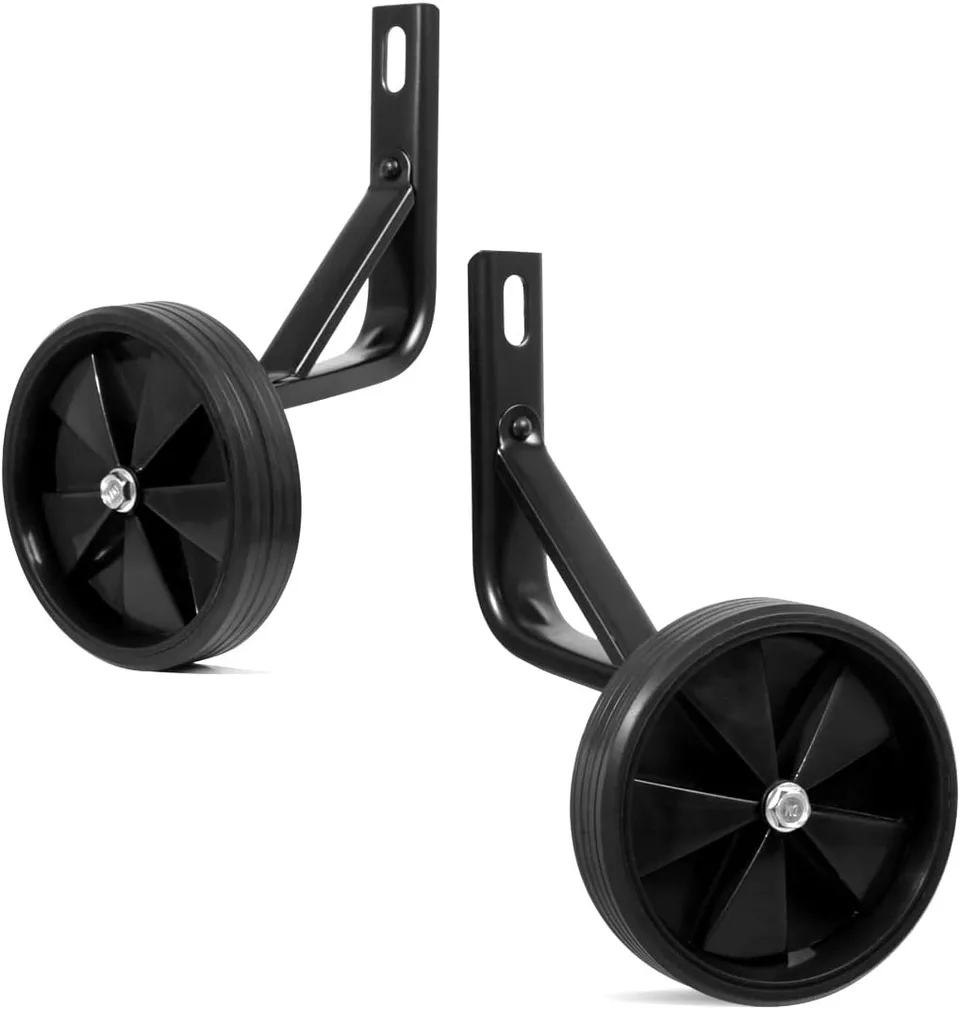
Joystar DRBIKE 12" Heavy Duty Training Wheels
Heavy-duty version sized for 12" kids bikes - extra-stout brackets target rougher use and slightly heavier riders.
What to look for in training wheels in 2026
- Wheel-size compatibility - buy the size that matches your child's bike (12 / 14 / 16 / 18 / 20 inch). Universal 'adjustable' brackets cover the full range but add weight; size-specific sets are lighter and lower-profile.
- Axle type - most kids bikes use a one-piece coaster-brake rear axle, which fits standard training-wheel brackets. Bikes with a rear derailleur or thru-axle need longer hardware or a derailleur-compatible bracket; check the seller listing.
- Mounting hardware included - quality sets ship with the long bolts, washers, and nuts you need. Cheaper sets reuse the existing axle nuts, which can be too short on some frames; double-check before installing.
- Heavy-duty vs standard - for kids over ~50 lb (23 kg) or for rough sidewalks and grass, look for steel brackets and solid (rather than hollow) plastic tires. Standard sets are fine for indoor and smooth pavement use.
- Adjustability for gradual lifting - slotted or multi-hole brackets let you raise the wheels in small steps as your child improves balance, instead of an all-or-nothing removal. This is the single biggest difference between sets that 'work' and sets that frustrate kids.
- Wheel material - solid plastic wheels are quiet and last on smooth pavement; rubber-tired plastic is grippier on slick surfaces; steel-rim wheels with rubber tires roll best on rough ground but cost more and weigh more.
Sizing & fit
Training wheels must match the rear wheel diameter of your child's bike - most kids bikes are 12, 14, 16, 18, or 20 inches. Measure across the tire if the size isn't printed on the sidewall. Most stabilisers bolt onto the rear axle (between the frame dropout and the axle nut) and use a long L-shaped bracket to position the wheel beside the tire. Set them about 1/2 inch (12 mm) above level ground at first so the bike still leans slightly - that lean is what teaches balance. As confidence grows, raise the brackets a hole at a time over a week or two until both wheels barely touch the ground, then remove. Most kids transition off training wheels by age 5-6 if they had a balance bike first, or age 6-8 starting from a pedal bike with stabilisers.
Our top training wheels picks for 2026
Check Amazon for current pricing and availability - we earn a small commission at no extra cost to you.
Joystar
Joystar DRBIKE Adjustable Training Wheels (12-20")
Universal training wheels - adjustable height lets you raise them as your child gets more confident before removing entirely.
Joystar
Joystar DRBIKE 14" Training Wheels
Sized specifically for 14" kids bikes. Use only on a flat surface as wheels lower the bike's ground clearance.
Joystar
Joystar DRBIKE 12" Heavy Duty Training Wheels
Heavy-duty version sized for 12" kids bikes - extra-stout brackets target rougher use and slightly heavier riders.
Joystar
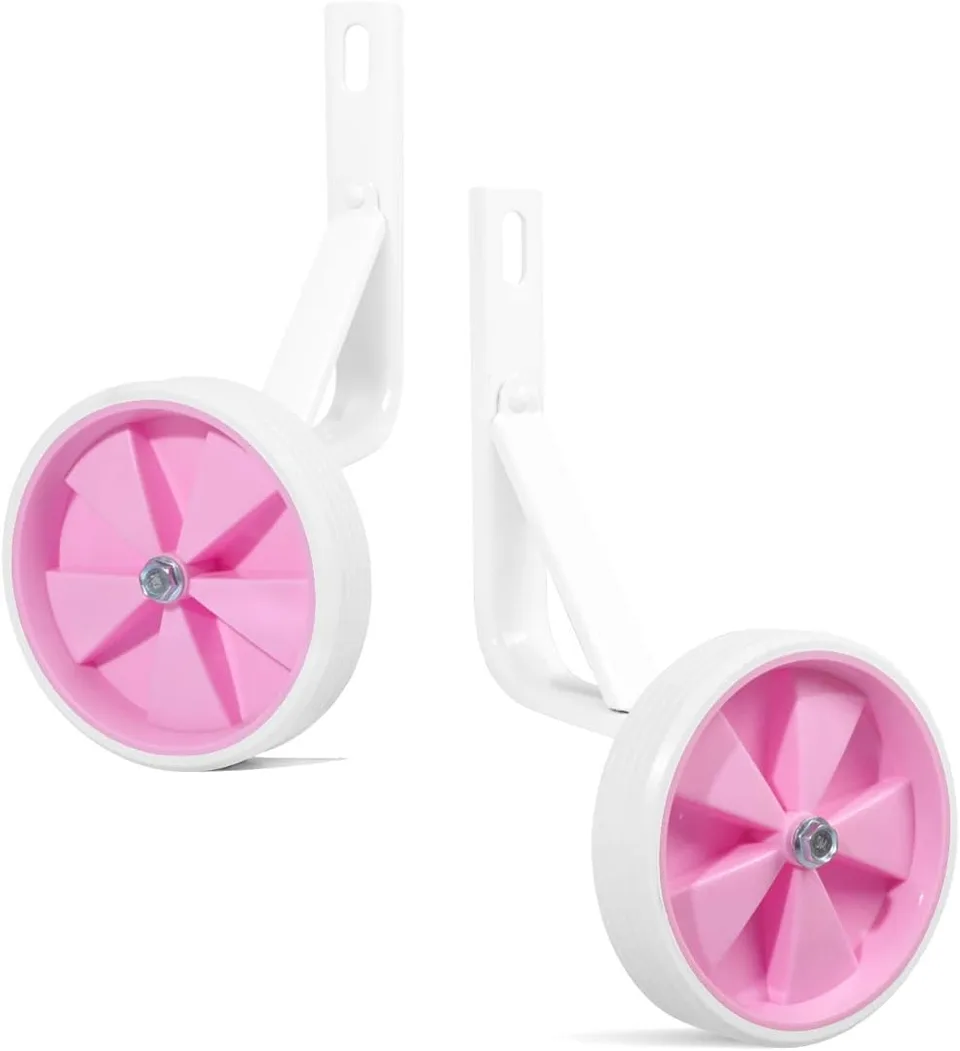
Joystar DRBIKE 16" Training Wheels
Sized for 16" kids bikes. Verify your bike's rear axle bolt length leaves enough thread for the bracket.
Royalbaby
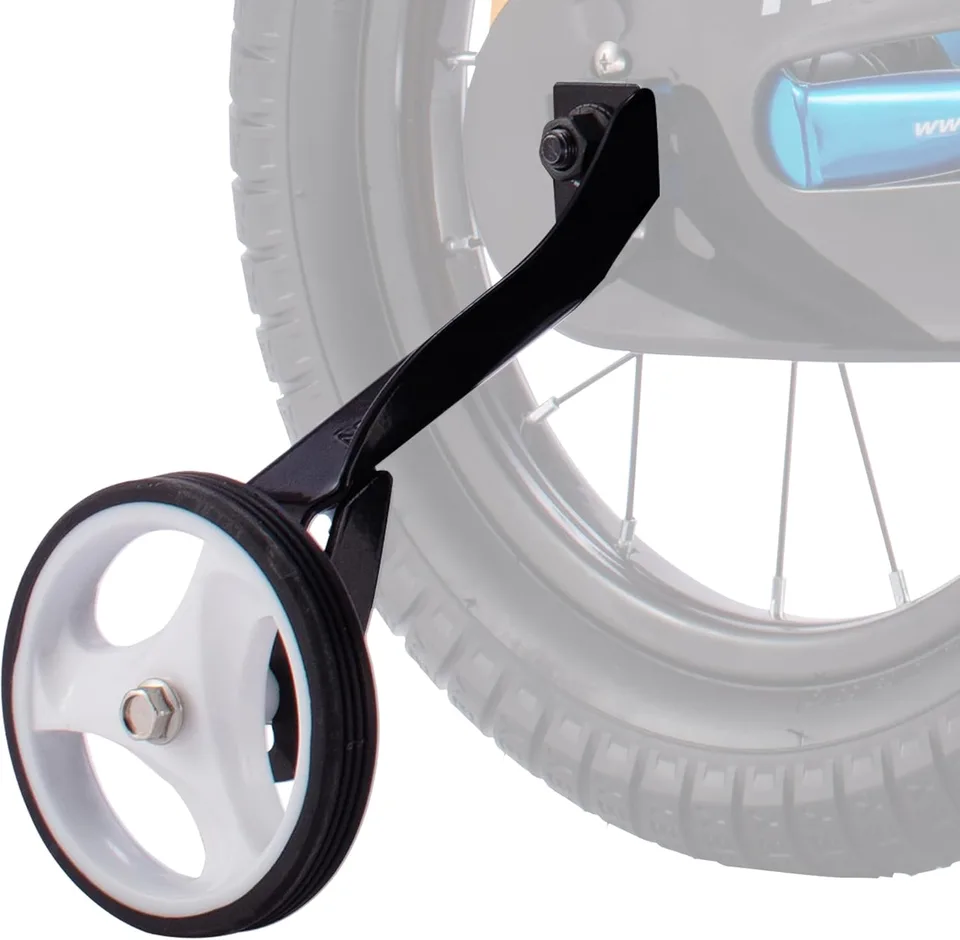
RoyalBaby Training Wheels for 16/18 Inch Kids Bikes
Sized for 16" and 18" RoyalBaby (and most other) kids bikes. Adjustable height lets you gradually raise them as confidence grows.
As an Amazon Associate we earn from qualifying purchases. Purchases made through these links help support our free calculators.
1. DRBIKE Adjustable Training Wheels (12-20")
Best universal pick. The DRBIKE adjustable set fits 12-, 14-, 16-, 18-, and 20-inch bikes with one bracket - useful if you have multiple kids on different bikes, or you're buying ahead of a wheel-size jump. Slotted bracket lets you raise the wheels gradually rather than yanking them off in one go.
Check DRBIKE Adjustable Training Wheels (12-20") on Amazon2. DRBIKE 14" Training Wheels
Pick the DRBIKE 14-inch set if your child's bike is exactly 14 inches and you want the lightest, lowest-profile stabiliser available. Drops about 80 g per side versus the universal bracket and tucks closer to the rear wheel, which is less to catch on driveway edges.
Check DRBIKE 14" Training Wheels on Amazon3. DRBIKE 12" Heavy Duty Training Wheels
The DRBIKE 12-inch heavy-duty pair is built for the 35-45 lb (16-20 kg) range - solid plastic tires, steel brackets, and longer bolts. Worth the small premium over standard 12-inch sets if your toddler is already pushing the weight limit of their first pedal bike.
Check DRBIKE 12" Heavy Duty Training Wheels on Amazon4. DRBIKE 16" Training Wheels
DRBIKE's 16-inch set is the direct replacement for the cheap stamped-steel stabilisers that come stock on many girls bikes - sturdier brackets and quieter, longer-lasting plastic wheels. Same hardware fits any 16-inch coaster-brake kids bike regardless of brand or colour.
Check DRBIKE 16" Training Wheels on Amazon5. RoyalBaby Training Wheels for 16/18 Inch Kids Bikes
RoyalBaby's heavy-duty 16/18-inch set is the pick for heavier kids or rougher surfaces. Steel mounting arms (not stamped sheet metal), thicker plastic wheels, and quick-release-friendly hardware make it the longest-lasting option in this price band - and it's a drop-in fit on RoyalBaby's own 16- and 18-inch bikes.
Check RoyalBaby Training Wheels for 16/18 Inch Kids Bikes on AmazonCommon mistakes to avoid
Setting them dead level on day one
If both training wheels touch the ground at the same time, the bike never leans, and your child never learns balance - they just learn to pedal. Set the brackets so the bike can lean about 10-15 degrees before a stabiliser hits, then raise the wheels every few rides as confidence grows.
Buying universal when you needed size-specific
Adjustable 12-to-20-inch sets work, but they're heavier and bulkier than a size-matched set, and the long bracket can fold under impact when a heavier child rides over a curb. If you know the bike's wheel size won't change for a year, buy the matching size.
Reusing the bike's original rear-axle nut
Stock kids-bike axle nuts are sized for the frame alone - not the frame plus a 4 mm-thick training-wheel bracket. The nut catches one or two threads instead of five or six, and the wheel works loose. Always use the longer bolts and lock nuts that come with the training-wheel set.
Skipping balance practice and going straight to stabilisers
Kids who start on a balance bike (12-inch, no pedals) typically skip training wheels entirely or use them for a single weekend before transitioning. If your child is 3-5 and brand new to bikes, a balance bike first will save you money on stabilisers later.
The final word
Training wheels are a tool, not a destination. The job is to keep your child upright long enough to learn to pedal and steer, then to disappear. Buy the size that matches the bike, raise them gradually, and aim to have them off within a season - most kids are ready before parents are.
Training Wheels FAQs
See every training wheels we recommend
The full category page lists every training wheels pick with sizing notes, FAQs, and persona-specific guidance.