Best Bike Lights 2026: Beam, Lumens, Modes & Laws
Last reviewed
For a ready front-and-rear setup, this Lezyne bundle pairs a Macro Drive 1400+ front light with a Strip Drive 400+ rear light; check the mode, beam, and local rules.
Quick picks at a glance
| Pick | Best for | What to check |
|---|---|---|
Lezyne Lezyne Macro Drive 1400+ / Strip Drive 400+ Light Set Front-and-rear set: Macro Drive 1400+ front light with Tri-Focus Optics and Strip Drive 400+ rear light. $154.994.1 | Best front-and-rear light set | The catalog identifies a Lezyne Macro Drive 1400+ and Strip Drive 400+ bundle, with USB-C charging and an IPX7 rating listed for the front unit. |
Cateye Cateye AMPP 2200 2200 lm: highest output in CatEye lineup; for serious trail/night riding. $159.954.3 | Best high-output front light | The CatEye AMPP 2200 catalog entry lists a 2,200-lumen output, USB-C charging, and IPX7 rating. |
Garmin Garmin Varia RTL515 65 lm + radar: detects vehicles approaching from behind; sends alerts to phone. $149.984.8 | Best rear light with radar | Garmin's Varia RTL515 catalog entry combines a rear light with approaching-vehicle radar and lists up to six hours in solid or night-flash mode. |
Winners by use case
Macro Drive 1400+ / Strip Drive 400+ Light Set
The catalog identifies a Lezyne Macro Drive 1400+ and Strip Drive 400+ bundle, with USB-C charging and an IPX7 rating listed for the front unit.
Check on AmazonAMPP 2200
The CatEye AMPP 2200 catalog entry lists a 2,200-lumen output, USB-C charging, and IPX7 rating.
Check on AmazonVaria RTL515
Garmin's Varia RTL515 catalog entry combines a rear light with approaching-vehicle radar and lists up to six hours in solid or night-flash mode.
Check on AmazonStart with the job, not the lumen count. A light used to help drivers notice you on a bright commute needs a different beam and mode from one used to find potholes on an unlit descent.
Lighting rules do not travel with the product. Germany's StVZO requires approved, non-dazzling bicycle lighting and prohibits flashing headlights and taillights. US operating rules vary by state, so check the law where you ride before choosing a mode.
Your route, speed, weather, ride length, mounting space, and local rules all matter. The guide below turns those constraints into a practical front-and-rear setup, then compares a small set of products whose identities and core claims were checked against manufacturer information.
How we chose these lights
- Choose a front, rear, or combined set based on the route and the lighting required by local law.
- Compare beam shape and cutoff as well as maximum output; lumens alone do not describe where light lands.
- Plan runtime around the mode you will use, with reserve for delays and cold conditions.
- Check mounting location, cockpit space, and compatibility with your bars, seatpost, or computer mount.
- Use the manufacturer's stated weather-resistance rating without treating it as permission to submerge or charge a wet light.
- Treat radar and visibility features as aids, not substitutes for looking, signaling, reflectors, or legally required lighting.
Picks are based on manufacturer specifications, applicable certifications, and published feedback. We do not claim hands-on testing unless it is explicitly described.
What to look for in lights in 2026
- Job and route: being seen, lighting the road, or both
- Beam width, throw, side spill, cutoff, and stable aim
- Runtime in the mode you will use, plus a delay and cold-weather reserve
- Front and rear mount compatibility, visibility, and bag or rack clearance
- Charging connector, charge time, battery indicator, and field-recharge limits
- Manufacturer-stated IP rating with the charging-port cover fitted
- Local rules for lamp color, flashing modes, reflectors, approval marks, and mounting
Sizing & fit
Choose output only after deciding whether the light must help others notice you or illuminate an unlit route. Compare the beam shape and runtime in the mode you will use; no lumen number guarantees useful visibility.
Choose a bike-light setup by job and route
Bike lights do two different jobs: they help other people notice you, and they help you read the road or trail. Some lights can do both, but the harder job should drive the choice. Start with the darkest, fastest, or longest part of your regular ride.
| Riding environment | Front-light job | Rear-light job | Check before buying |
|---|---|---|---|
| Daylight on busy roads | Conspicuity mode with a focused, visible pattern; aim it away from eyes. | A visible rear mode allowed by local law; keep the required rear reflector. | Full-sun visibility, mode legality, and enough runtime for the return trip. |
| Lit urban streets after dark | A controlled steady beam that fills gaps between streetlights without glare. | Steady, pulse, or hybrid mode as allowed locally, plus required reflectors. | Side visibility, wet-road glare, bag clearance, and secure mounts. |
| Unlit road or gravel | More throw and useful spill, chosen for your speed rather than a lumen target. | A rear light visible from the required distance; consider an independent backup. | Runtime in the actual mode, cold-weather reserve, beam aim, and dark gaps. |
| Dark singletrack | Stable bar light for depth plus an optional helmet light for corners. | Use one when the route includes roads or shared access, subject to local rules. | Mount retention, cable or battery-pack routing, heat limits, and backup light. |
Beam pattern matters more than the headline lumens
Lumens describe total light output. They do not tell you how much light reaches the pavement, how far the bright center extends, or whether the beam has enough side spill to show a curb or trail edge. Compare beam diagrams or credible night photos for width, throw, cutoff, and dark gaps. The faster you ride, the farther ahead the useful part of the beam needs to reach.
A cutoff or dipped beam limits light above a boundary and can reduce glare when it is mounted and aimed correctly. That does not make every shaped beam road legal. Germany's StVZO section 67 requires approved bicycle lighting and non-dazzling aim. A US-market light with a focused optic is not automatically StVZO approved.
Check the law before choosing a flash mode
Color, flash pattern, visibility distance, approval marks, mounting, and reflector requirements can all change at a border. Germany prohibits flashing bicycle headlights and taillights. Great Britain allows qualifying flashing cycle lamps under specific conditions. California permits a qualifying solid or flashing red rear light in defined circumstances.
US riders can start with the bike-light and reflector law guide. For primary sources, see Great Britain's pedal-cycle lighting guidance and California Vehicle Code section 21201. Recheck the current rule where you ride; this guide is not legal advice.
Front, rear, and reflector combinations
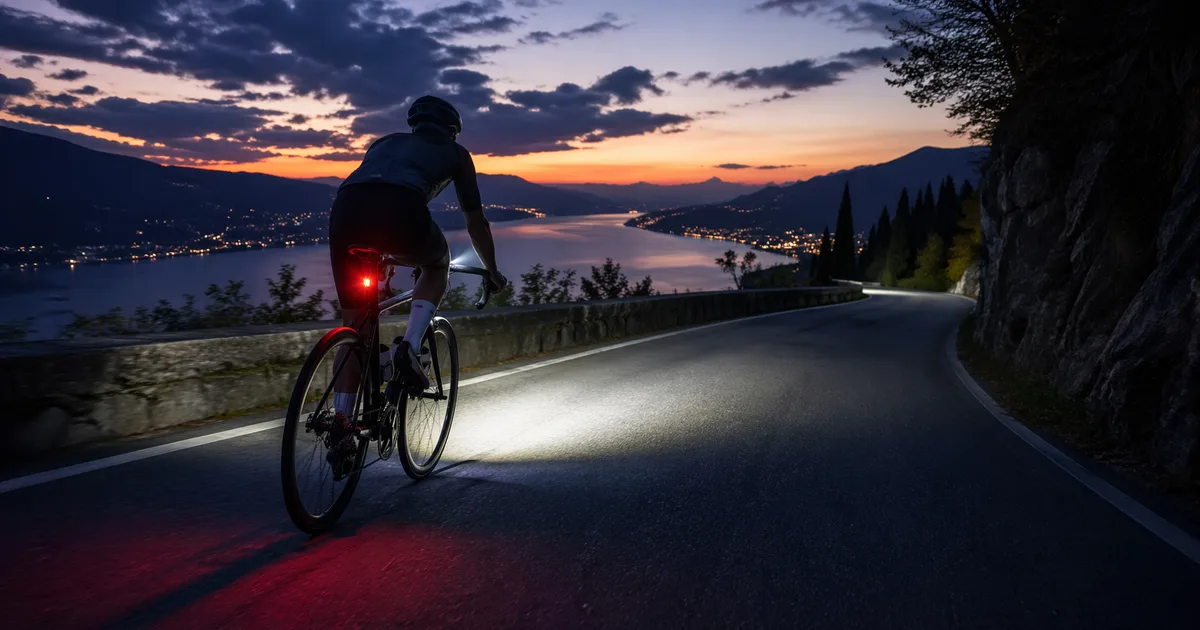
After dark, plan around a white front light and a red rear light or reflector arrangement that meets local law. The front beam may need to do real illumination work; the rear light is mainly about conspicuity. A second independent rear light can add redundancy on a long or remote ride, but it is not a universal requirement.
Reflectors and lights are not interchangeable. Reflectors return light from another source, while lamps emit light. The US federal bicycle reflector rule covers front, rear, pedal, and side reflectors on covered bicycles; state and local rules determine what you must use on the road. Do not remove required reflectors because you fitted brighter lights.
Plan runtime, charging, mounts, and rain together
Read the runtime table for the mode you expect to use. Then add a delay reserve and allow for cold temperatures, battery age, and an incomplete charge. "Up to" runtime comes from controlled manufacturer testing, so a rating equal to your planned ride time is too close. For remote rides, an independent charged backup is simpler than discovering that a light cannot operate from a power bank.
USB-C describes the connector, not the supported charging protocol. Check charge time, input requirements, cable inclusion, battery indicator behavior, and whether the manual permits operation while charging. If you prefer replaceable cells, confirm the exact cell type and carry spares separately.
Mount the front light where cables and bags cannot block it, and the rear where clothing, racks, and saddle bags do not hide it. Confirm the clamp fits the bar or seatpost and holds its aim over rough ground. Before a wet ride, use the manufacturer's stated IP rating, close the port cover, and include the lights in your pre-ride safety check. An IP rating is not a warranty against every kind of water exposure.
A quick setup check
Charge both lights, select a legal mode, confirm the front beam lands where you need it, and walk around the loaded bike to find blocked angles. Riders dealing with long nights and spray should also read the winter cycling setup guide. If you commute or ride an e-bike, the commuter setup guide and e-bike rider guide cover the mounting and handling constraints that often crowd the bars and rear rack.
Our top lights picks for 2026
Check Amazon for current pricing and availability - we earn a small commission at no extra cost to you.
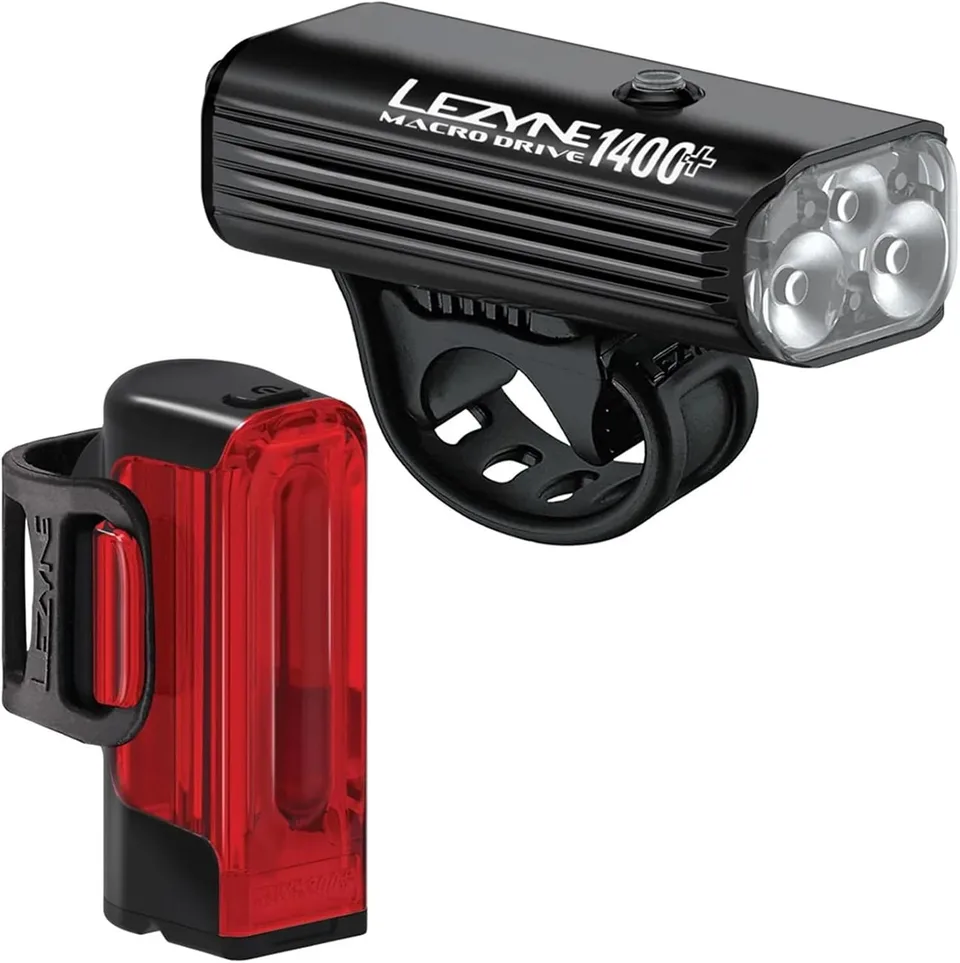
Lezyne
Lezyne Macro Drive 1400+ / Strip Drive 400+ Light Set
Front-and-rear set: Macro Drive 1400+ front light with Tri-Focus Optics and Strip Drive 400+ rear light.
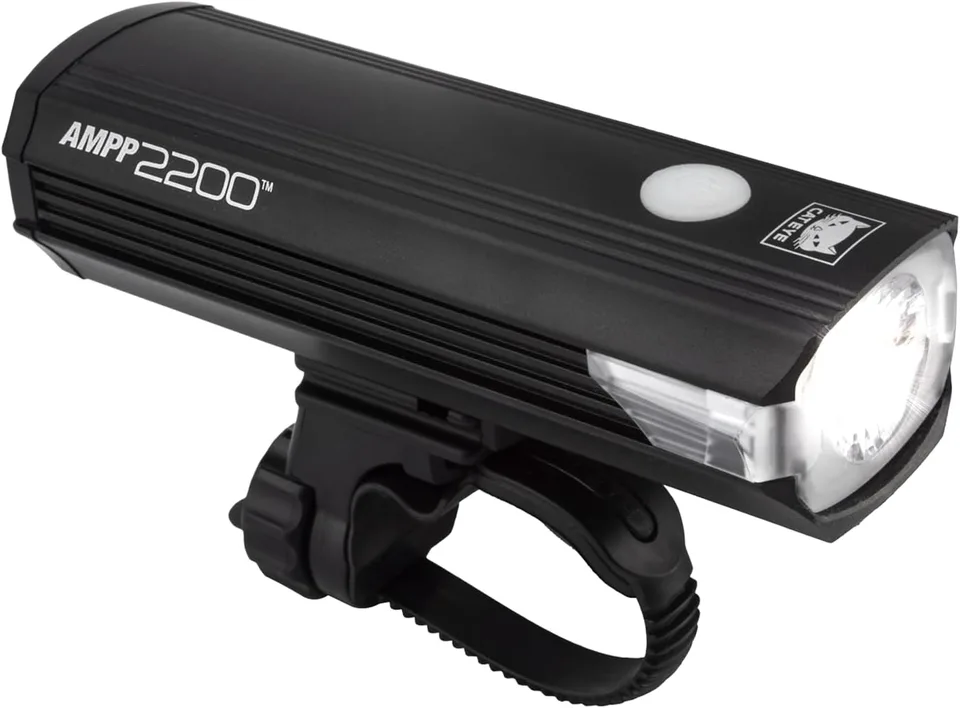
Cateye
Cateye AMPP 2200
2200 lm: highest output in CatEye lineup; for serious trail/night riding.
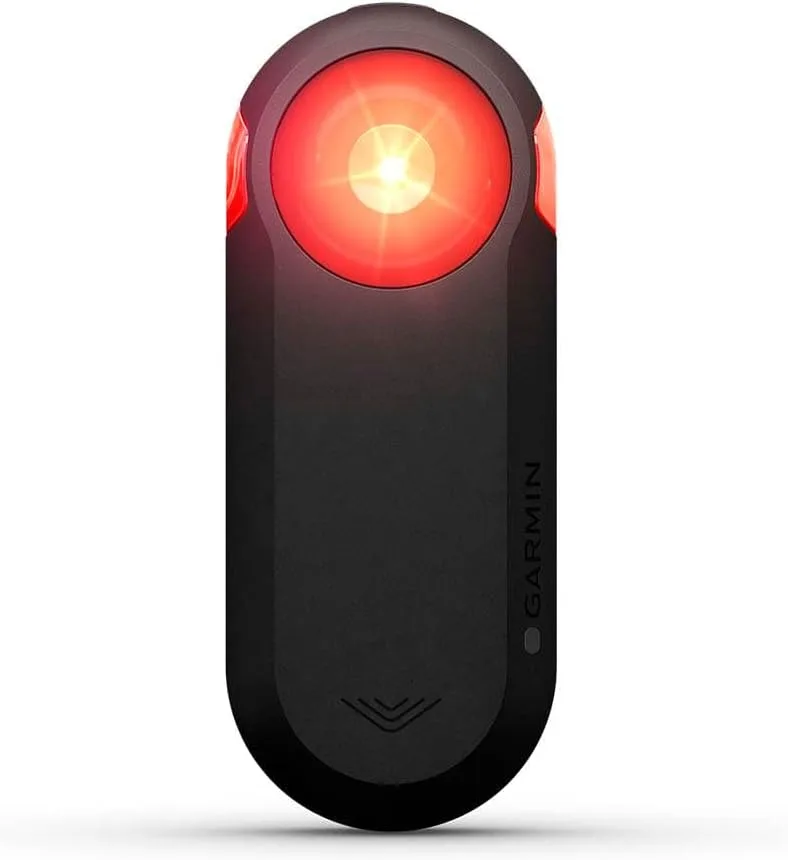
Garmin
Garmin Varia RTL515
65 lm + radar: detects vehicles approaching from behind; sends alerts to phone.
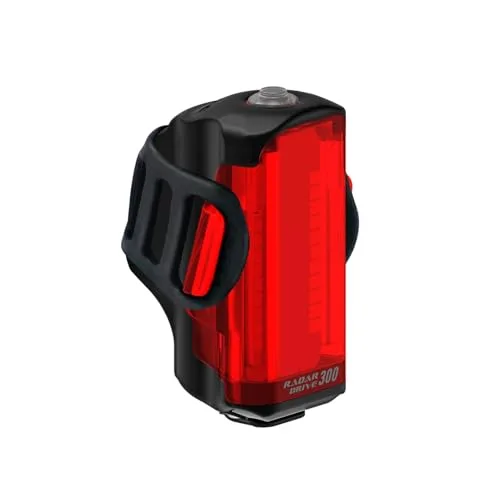
Lezyne
Lezyne Radar Drive Rear LED Bike Light
A cleaner fit than the full set if you already ride with a compatible GPS computer or prefer phone alerts. The strap kit includes adapters for aero and D-shaped posts.
Magicshine
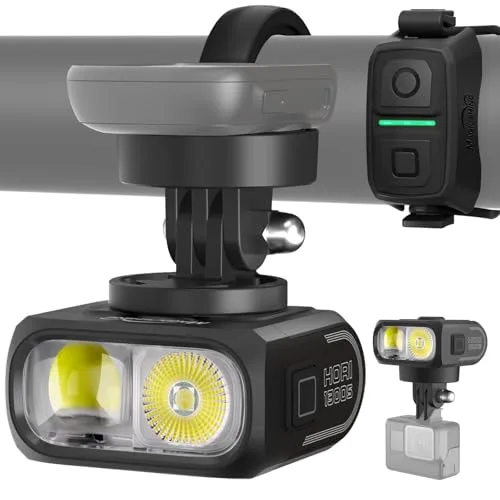
Magicshine HORI 1300S Bike Light
Choose this over the ALLTY if cockpit space matters. The mount setup is friendlier to riders stacking a light with a cycling computer or camera.
As an Amazon Associate we earn from qualifying purchases. Purchases made through these links help support our free calculators.
1. Macro Drive 1400+ / Strip Drive 400+ Light Set
This Amazon listing pairs Lezyne's Macro Drive 1400+ front light with a Strip Drive 400+ rear light. For the front unit, Lezyne lists a 1,400-lumen maximum, Tri-Focus optics, USB-C charging, an IPX7 rating, and modes ranging from high output to a long-running Femto setting. The Macro Drive is not StVZO approved, so its shaped optic should not be read as a legal approval.
Check Macro Drive 1400+ / Strip Drive 400+ Light Set on Amazon2. AMPP 2200
CatEye's AMPP2200 is the high-output front pick for riders who need more light on unlit routes. CatEye lists a 2,200-lumen boost, a wide OptiCube beam with side visibility, USB-C charging, seven modes, and mode-specific runtime from about one hour at maximum output to 60 hours in flashing mode.
Check AMPP 2200 on Amazon3. Varia RTL515
Garmin's Varia RTL515 combines a rear light with approaching-vehicle radar. Garmin lists up to six hours in solid or night-flash mode, eight hours in peloton mode, and 16 hours in day-flash mode. Radar is an awareness aid, not a substitute for looking, signaling, or a legally required light and reflector setup.
Check Varia RTL515 on Amazon4. Lezyne Radar Drive Rear LED Bike Light
Best rear radar light when you do not need a full front-and-rear set. Lezyne's Radar Drive page lists 300 lumens, seven output modes, 270-degree visibility, IPX7 sealing, USB-C charging, and vehicle detection up to 150 m, so it fits riders who already use a compatible head unit or the Radar Ally app.
Check Lezyne Radar Drive Rear LED Bike Light on Amazon5. Magicshine HORI 1300S Bike Light
Best cockpit-friendly front light. Magicshine lists a 1300-lumen high beam, cutoff-style low beam, USB-C charging, IPX6 sealing, and mounts that work with Garmin, Wahoo, Bryton, and GoPro setups. Pick it when bar space matters as much as output.
Check Magicshine HORI 1300S Bike Light on AmazonCommon mistakes to avoid
Buying lumens, not beam pattern
Total output does not show where the light lands. Compare beam diagrams or credible night photos for center intensity, width, side spill, cutoff, and dark gaps, then aim the light so it covers your route without dazzling other road users.
Planning from the maximum-runtime headline
Runtime changes by mode, temperature, battery age, and charging state. Plan from the mode you will actually use and leave enough reserve for delays or a cold ride home.
Assuming one flash rule works everywhere
A daytime flash pattern may improve conspicuity, but flash legality and suitable nighttime use vary by jurisdiction. Check local rules and avoid a front mode that makes the road harder to read or dazzles others.
Treating an IP rating as an all-weather guarantee
Use only the manufacturer's stated IP rating, keep the charging cover closed as instructed, and do not assume rain resistance covers submersion, pressure washing, or charging while wet.
Removing reflectors after adding lights
Reflectors return light from another source; lamps emit their own. Many laws require both, so keep the required front, rear, pedal, and side reflectors unless the rule for your jurisdiction explicitly says otherwise.
The final word
Build the setup around the hardest part of your usual ride. Compare bike lights by beam and runtime, keep the mounts clear and aimed, and retain required reflectors. Then check the rules where you ride. A second light can add redundancy on long or remote trips, but it does not fix a poor beam, flat battery or illegal mode.
Update log
- Added selection criteria, quick answer, and catalog-backed segmented winners after checking selected products against the in-repo category catalogs. This was not a full product-availability audit.
Lights FAQs
Lights head-to-head comparisons
Already narrowed to two contenders? See the detailed match-ups our editors put together for lights.
Compare AMPP 2200 and Macro Drive 1400+ / Strip Drive 400+ Light Set by their listed features, fit, and intended use.
Compare AMPP 2200 and Magicshine HORI 1300S Bike Light by their listed features, fit, and intended use.
Compare Varia RTL515 and Lezyne Radar Drive Rear LED Bike Light by their listed features, fit, and intended use.
Compare a front-and-rear light set with a standalone radar taillight, focusing on the rear-light role and what each listing includes.
Compare Macro Drive 1400+ / Strip Drive 400+ Light Set and Magicshine HORI 1300S Bike Light by their listed features, fit, and intended use.
Two front lights for riders who need real road or gravel illumination. Magicshine wins on price, while Lezyne brings the higher-output front-and-rear bundle.
Two USB-C rechargeable front lights aimed at riders who actually need to see, not just be seen. Lumen counts are close - runtime, beam pattern, weatherproofing, and mount design decide it.
See every lights we recommend
The full category page lists every lights pick with sizing notes, FAQs, and persona-specific guidance.
Related calculators & tools
See how speed changes the distance your beam must cover
Match lens tint and anti-fog features to low-light rides