Rider-matched picks
Saddles for competitive cyclists
Size-matched saddles picks for competitive cyclists, with fit and feature priorities curated for how competitive cyclists actually ride.
Open the saddles calculator
Saddles picks for competitive cyclists
Check Amazon for current pricing and availability.
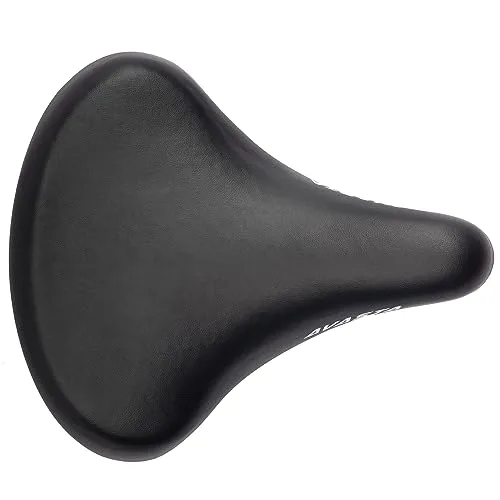
Avasta
AVASTA Small Kids Saddle - Black
This offer is size S (For 12-20" Bike), color Black. Check the selected variant and mounting or fit requirements before ordering; other family variants are separate listings.
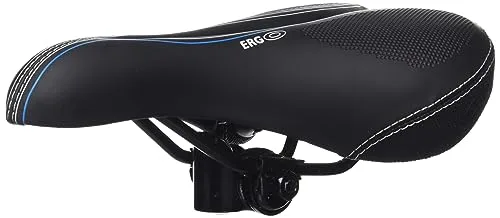
Bell
Bell Comfort Sport Seat
A narrow sport saddle, not a wide cruiser seat. Check saddle width and seatpost compatibility before installing the included clamp.
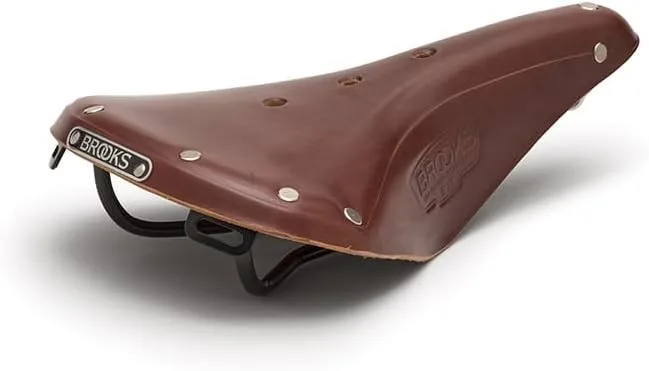
Brooks England
Brooks England Brooks B17
Fixed width 155 mm; fits sit-bone 130-160 mm; requires break-in period (50-100 miles)
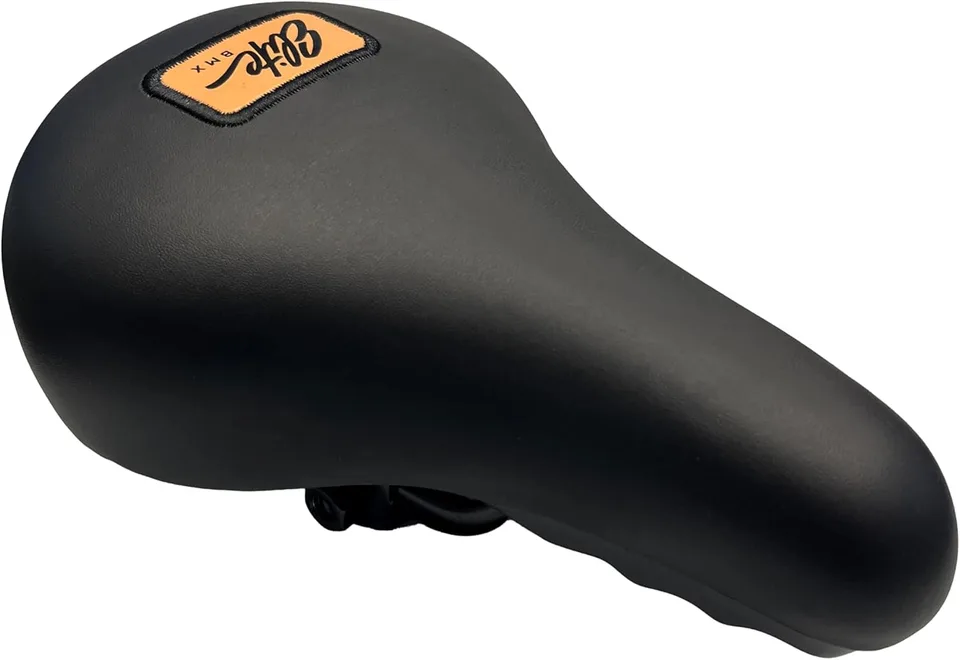
Elite Bmx
Elite Bmx Elite Bicycle Saddle
Standard rail mounting fits Elite BMX Stealth, Pee Wee, Destro, and Outlaw frames as well as most other BMX seatpost clamps. Saddle height for street BMX is typically inseam × 0.7-0.85.
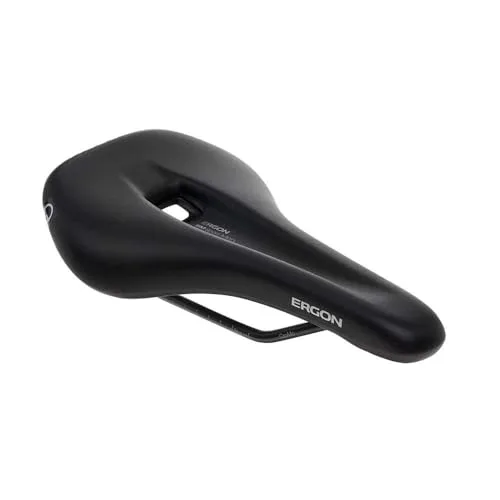
Ergon
Ergon SM Sport Men - S/M
This offer is size S/M, color Black. Check the selected variant and mounting or fit requirements before ordering; other family variants are separate listings.
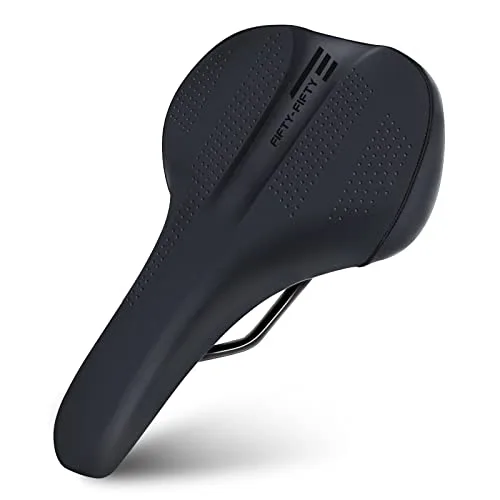
Fifty Fifty
Fifty Fifty FIFTY-FIFTY Memory-Foam MTB Saddle
Comfort-shaped saddle ~175 mm wide - a good upgrade for upright MTB, hybrid, and e-MTB riders who find narrow OEM saddles painful. Standard chromoly rails fit any seatpost rail clamp. Not a performance saddle - the memory foam adds weight and bulk that race riders will dislike.
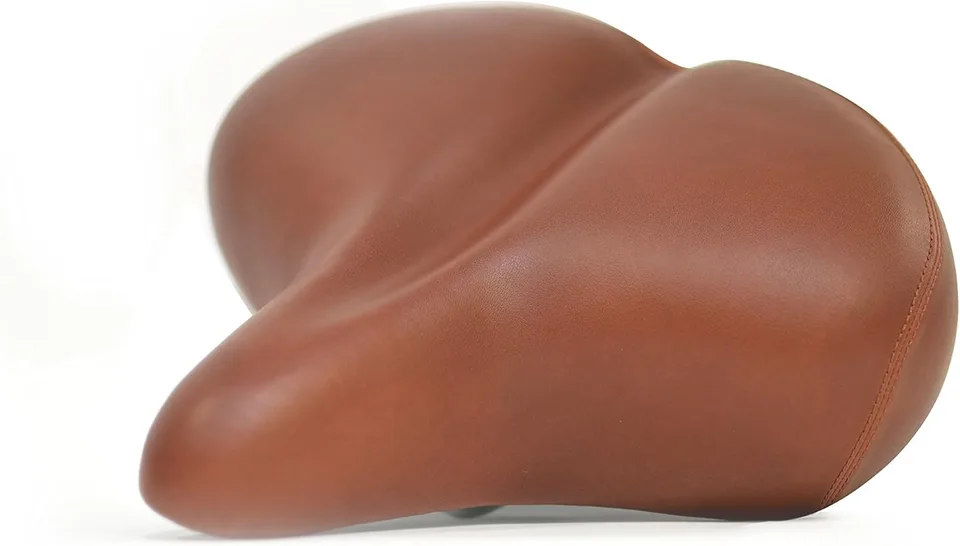
Firmstrong
Firmstrong Bubble Bicycle Saddle
Universal fit - installs on any standard seatpost. Wider than a road saddle (~10" across the rear), oriented for upright cruiser posture. Not appropriate for road or aggressive MTB positions.
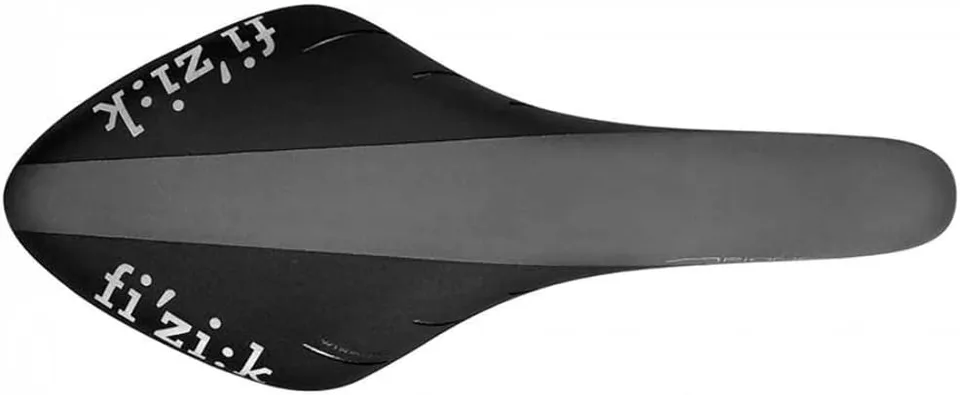
Fizik
Fizik Arione R3
Available widths 142, 154 mm; fits sit-bone 120-145 mm
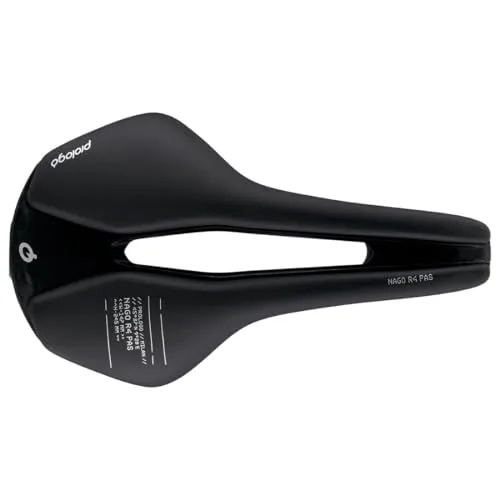
Prologo
Prologo Nago R4 PAS Nack Saddle - 147mm
This offer is size 245x147mm, color Hard Black. Check the selected variant and mounting or fit requirements before ordering; other family variants are separate listings.
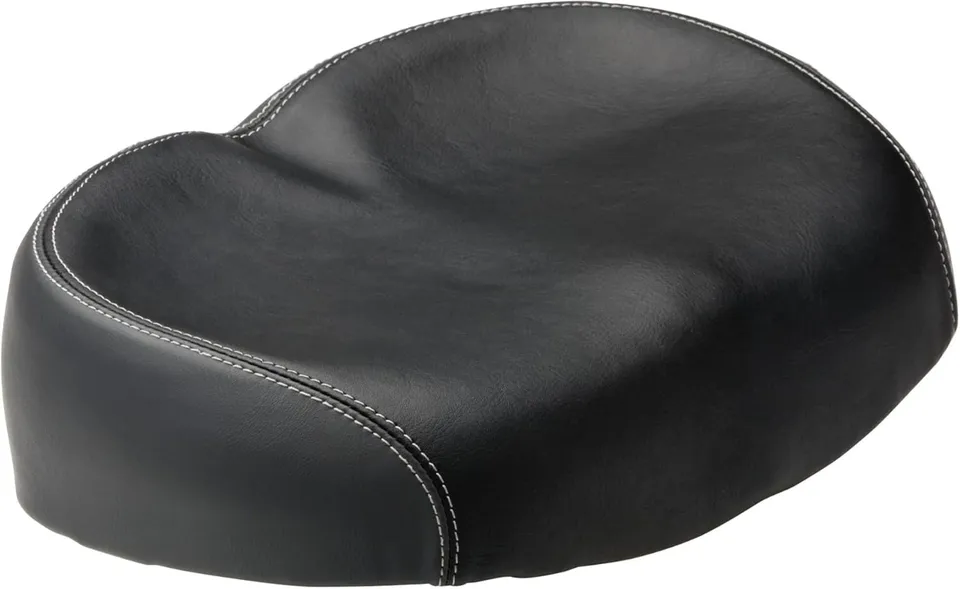
Schwinn
Schwinn No-Pressure Comfort Bike Seat
Extra-wide noseless saddle aimed at upright cruiser and recumbent-style riding postures. Pressure-relieving design rather than a performance fit - best for casual riding, not road or mountain.
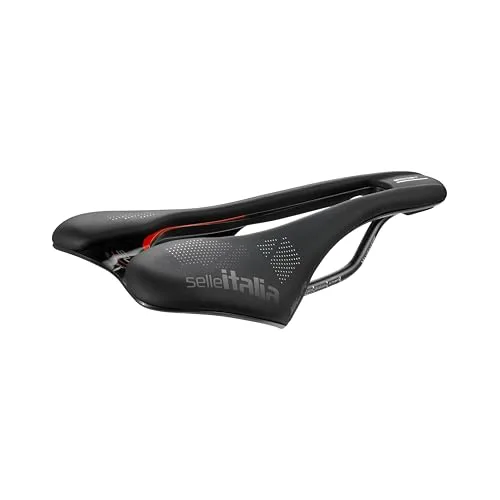
Selle Italia
Selle Italia SLR Boost KC TM Superflow, S3, Black/Red
This Amazon offer is the S3 variant; compare its dimensions with Selle Italia's current fit chart before ordering.
Selle Royal
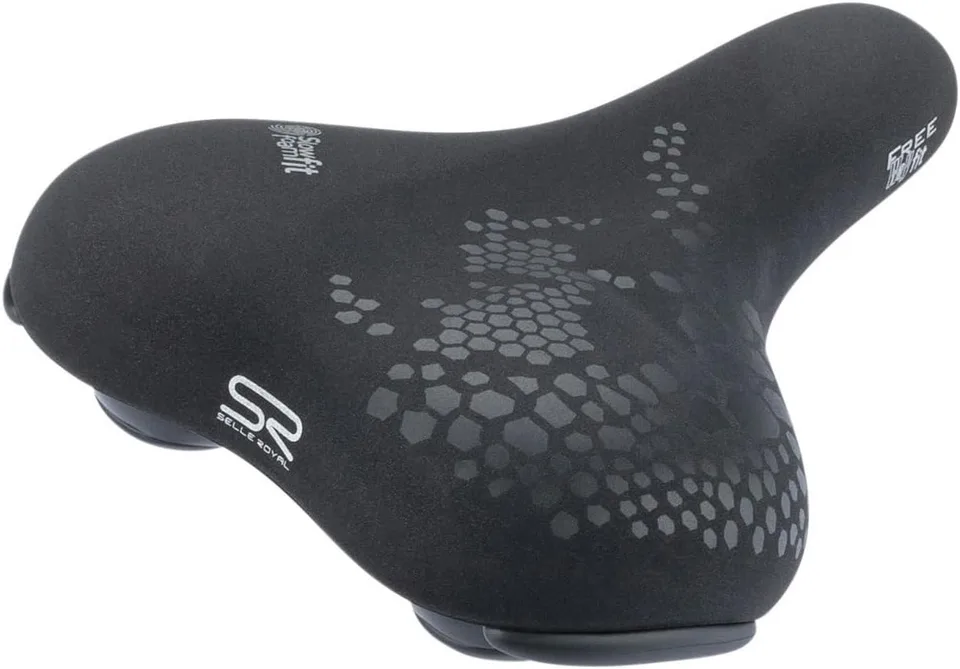
Selle Royal Freeway Fit
Available widths 145, 160, 175 mm; fits sit-bone 130-175 mm
As an Amazon Associate we earn from qualifying purchases. Purchases made through these links help support our free calculators.
What matters for competitive cyclists
Racing demands aggressive positioning that prioritizes aerodynamics and power transfer over pure comfort. This means a handlebar drop of 5-10cm below saddle height for optimal frontal area reduction, reach that allows a flat back with bent elbows at approximately 155-165 degrees, and precise saddle positioning with knee tracking directly over the pedal spindle at 3 o'clock. However, you must have the flexibility and core strength to sustain these positions - overreaching creates inefficiency, power loss, and injury. Most professional fitters use the 109% inseam method for saddle height and adjust reach based on shoulder flexibility tests. For criterium racing, consider slightly shorter reach for quick handling in tight corners. For time trials, a lower front end with aero extensions changes the fit equation entirely. If you're spending over $5,000 on a race bike, invest $200-350 in a professional Retül or Guru bike fit to optimize your position.
Saddles sizing guidance
Saddle width should match sit-bone width plus 20-30 mm depending on riding posture and flexibility. Sit-bone width can be measured using a pressure mat or estimated as 65-70 mm for most adults. Road saddles tend narrower (120-155 mm); MTB and commuter saddles wider (150-180+ mm). Available widths within a product line typically span 142-154 mm or 155-168 mm.
Most competitive cyclists choosing saddles also compare bottle cages for competitive cyclists, brake pads for competitive cyclists, and chain lube for competitive cyclists.
Expert tips
- Invest in a professional bike fit before investing in expensive components-fit improvements outweigh equipment
- A lower position is only faster if you can maintain it-sustainability matters in racing
- Saddle height affects power output more than any other single adjustment-get it precisely right
- Train flexibility specifically for cycling-hip flexor and hamstring mobility enable better positions
Saddles head-to-head comparisons
Cross-shop the saddles competitive cyclists actually consider - specs, fit, and the deciding factor.
Compare Bell Comfort Sport Seat and Brooks B17 by their listed features, fit, and intended use.
Compare Bell Comfort Sport Seat and Ergon SM Sport Men - S/M by their listed features, fit, and intended use.
Compare Brooks B17 and Ergon SM Sport Men - S/M by their listed features, fit, and intended use.
Two comfort-cutout saddles aimed at upright riders - one a $38 Amazon-native upgrade from FIFTY-FIFTY, the other a $40 mainstay from Italy's Selle Royal. Padding, channel design, and width sizing decide which one is the better seat for a hybrid, commuter, or e-MTB.
Compare the long, flat Fizik Arione R3 with the short-nose Selle Italia SLR Boost KC TM Superflow. The current Selle Italia offer has gel padding, a Superflow opening, and chrome-manganese rails; check the listed size against your fit.