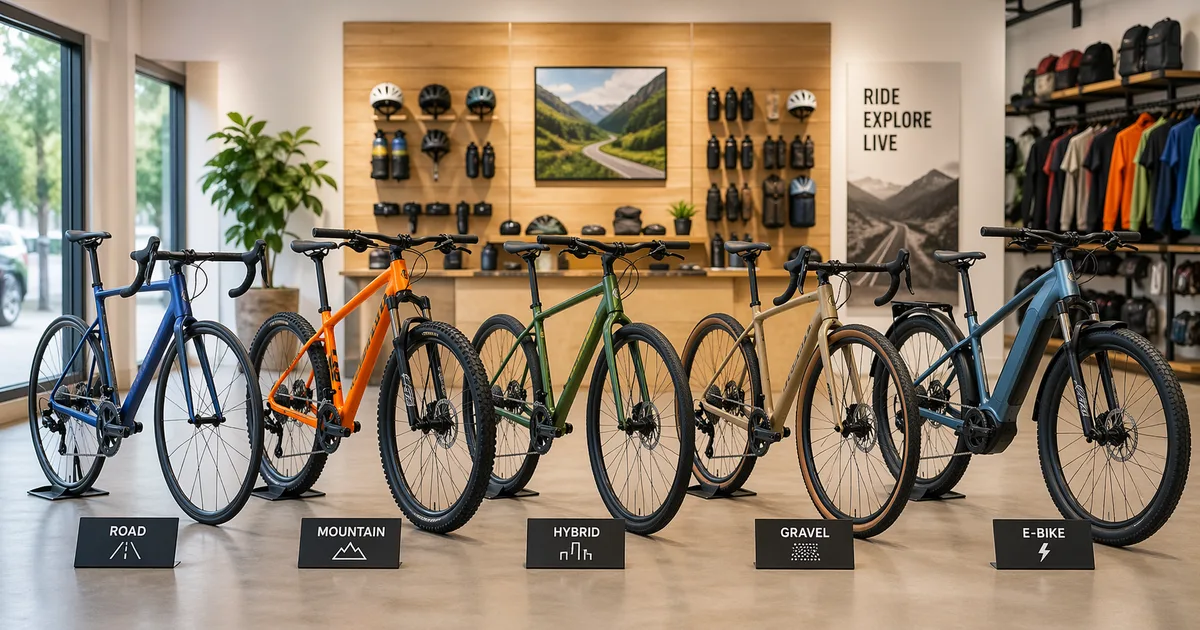
Terrain-first eMTB buying and sizing guide
GuideUse the calculator for a frame-size baseline, then come back here to choose the terrain, motor, and battery package.
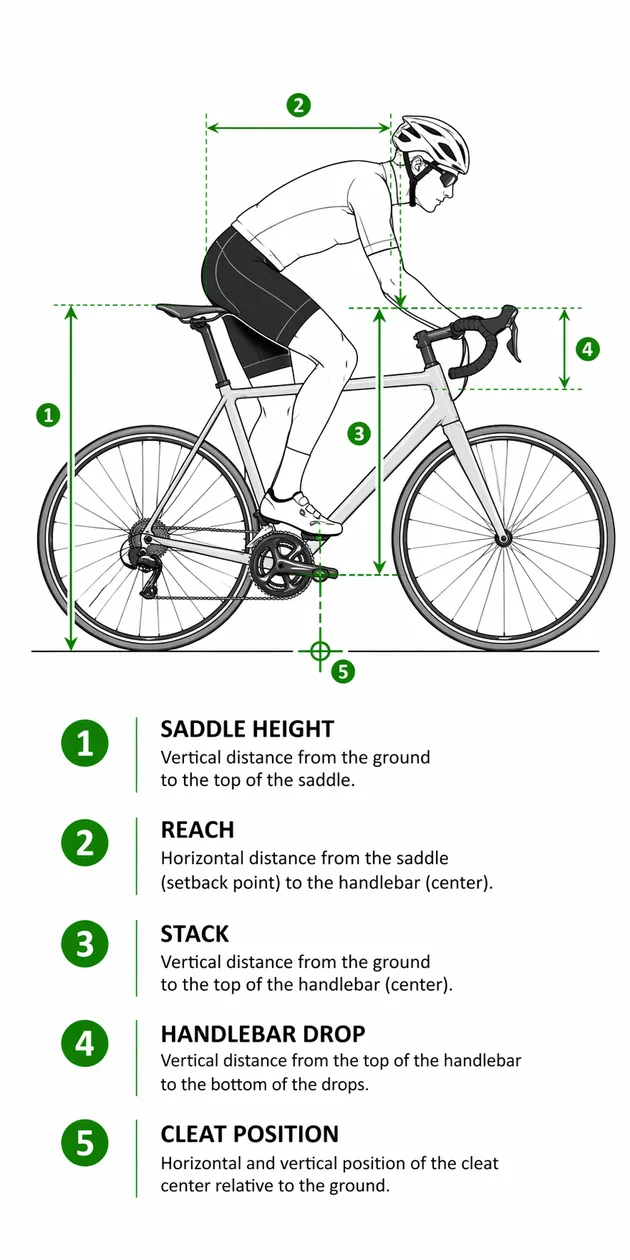
Most eMTB advice starts with motors or battery size. That is backward. Start with the trails you ride most often. A smooth fire-road climber, a rooty trail bike, and a bike-park shuttle rig can all be electric mountain bikes, but they should not lead you to the same frame, motor, suspension, or battery decision.
This page deliberately does not replace the e-bike size calculator or the mountain-bike sizing guide. Those pages own body measurements and general MTB fit. This guide owns the messy purchase question in the middle: which electric mountain-bike package fits your terrain before you start arguing over S, M, L, or XL.
What this guide owns
The existing BikeSize pages already cover broad questions well. The bike-category guide helps you decide whether a mountain bike belongs on the shortlist. The suspension travel guide narrows travel for any mountain bike. The hardtail versus full-suspension guide covers the chassis decision. This guide combines those ideas only where the electric system changes the purchase: motor feel, battery capacity, range extender compatibility, total weight, and sizing on real eMTB frames.
If you only need a frame-size number, go straight to the calculators. If you are comparing two electric trail bikes with different batteries, motors, and travel, stay here.
Tools to use with this guide
Use these after you have picked the terrain lane. They keep the page from pretending one chart can size every rider and every eMTB.
Get a frame-size starting point for electric bikes
Check MTB standover, reach, and frame size once you know the platform
Compare eMTBs with gravel, hybrid, cargo, and commuter bikes
Estimate ride range from battery, rider, terrain, and assist assumptions
Compare cockpit position across candidate frames
Put complete geometry charts side by side before you buy
Terrain-to-fit matrix
Use the terrain you ride on an ordinary week, not the hardest trip you hope to do someday. Motor power can get you to the top more often. It does not turn a nervous short-travel bike into a stable descender, and it does not make a long-travel bike pleasant on flat paths.
| Normal terrain | Bike platform | Motor and battery lean | Fit checks |
|---|---|---|---|
| Smooth XC, towpaths, forest roads | Hardtail or short-travel full suspension; efficient tires; conservative cockpit | Lighter support can make sense if rides are short and climbing is moderate. Use an official range tool before downsizing the battery. [S1] [S2] | Avoid oversized reach. You still need easy low-speed handling and safe standover. |
| Mixed singletrack with roots, rocks, and steady climbs | Trail eMTB with balanced travel and neutral geometry | This is the middle lane: enough battery for repeat climbs, not automatically the biggest pack. Trek lists rider weight, terrain, temperature, battery size, and motor efficiency as range factors. [S2] | Compare reach and stack while wearing trail shoes and a pack if you ride with one. |
| Steep technical trails and rough descents | Longer-travel trail or enduro eMTB with stronger brakes and tires | Full-power support and larger batteries get the stronger look because slow technical climbing asks more from the motor. Confirm system limits from the exact brand page. [S1] [S3] | Prioritize front-center, wheelbase, bar height, and confidence moving behind the saddle. |
| Lift, shuttle, park laps, and repeated drops | Enduro or gravity-oriented eMTB if the brand rates it for that use | Battery size matters less than heat, brakes, tires, service access, and whether the bike is approved for the terrain. | Size for stability only after checking you can still weight the front wheel and clear the bike. |
| Trail plus commuting, errands, or family rides | Trail hardtail or moderate full suspension with mounts if the frame offers them | Do not assume any range extender will fit. Trek says its PowerMore setup is compatibility-dependent, and Specialized sells different range-extender batteries and cables by system. [S4] [S5] | Check rack limits, stairs, storage weight, seat-post insertion, and charger access. |
Seven-step selector flow
- Write down your five most common rides, including distance, elevation, surface, and whether you ride alone or with faster groups.
- Pick the row in the terrain matrix that describes at least three of those rides.
- Use the suspension travel guide to narrow the travel family before comparing eMTB model names.
- Decide whether you want light assistance or full-power support. If the climbs are steep, loose, long, or loaded with gear, test full power before assuming a lighter bike will be enough.
- Estimate range with the exact system when possible. Bosch and Trek both point riders toward calculators or model-specific guidance. Use the e-bike range calculator once your battery shortlist is realistic because terrain, rider weight, temperature, and assist mode change the result. [S1] [S2]
- Check the size chart, then compare reach, stack, standover, seat tube length, and wheelbase. Specialized's Turbo Levo geometry tool is a useful example of why geometry settings and size labels need to be read together. [S6]
- Test the bike on the closest terrain you can find. If that is not possible, at least compare geometry against a bike you already know.
Motor and battery choices
Think of the motor system as part of the fit. A heavier full-power bike can feel planted on rough descents and helpful on steep climbs, but it can be awkward to lift onto a rack or carry upstairs. A lighter eMTB can feel closer to a normal trail bike, but the smaller battery may force more range planning.
Battery watt-hours are only the storage size. Range is the ride you get from that storage, and the two are not the same thing. Trek's eMTB FAQ names battery size, motor efficiency, rider weight, terrain, and temperature as range factors. Bosch provides a Range Assistant for system-specific estimates. Shimano's eMTB battery basics page makes the same point in practical terms: climbing, assist mode, and terrain change how quickly energy is used. [S1] [S2] [S3]
Range extenders are useful when they are supported by the frame and motor system. They are not universal accessories. Trek says PowerMore adds 250 Wh and an average 40 miles on compatible bikes, while also warning that actual range changes with conditions. Specialized lists range-extender batteries and cables as system-specific accessories. [S4] [S5]
| Question | If the answer is yes | What to verify |
|---|---|---|
| Do you climb for long periods? | Favor stronger support and a conservative battery plan. | Use the system range tool with rider weight, elevation, and assist mode. |
| Will you lift or carry the bike often? | Give lightweight systems and removable-battery designs more weight in the decision. | Check complete-bike weight, rack limits, stairs, and where you will charge it. |
| Do you ride remote loops? | Plan for reserve range instead of using the advertised best-case number. | Confirm range-extender compatibility before you buy the bike. |
| Are descents rough or steep? | Treat brakes, tires, suspension setup, and geometry as purchase requirements, not upgrades for later. | Check rotor size, tire casing, travel, reach, wheelbase, and warranty/intended-use language. |
Sizing checks before checkout
Once the terrain and system lane is clear, size the frame like a mountain bike with extra attention to weight and range. Start with our e-bike size calculator for a baseline, then use the mountain-bike size calculator to sanity-check standover and trail fit.
- Reach: compare the number, not just the size label. eMTB frames can run long because stability is part of the design brief.
- Stack and bar height: more front-end height can help on steep trails, but too much height makes it harder to weight the front tire.
- Standover: leave room for awkward dismounts. A heavy bike is less forgiving when you dab or step off on uneven ground.
- Seat tube and dropper insertion: make sure the saddle can go low enough for descending and high enough for pedaling.
- Wheelbase and chainstays: longer bikes feel calmer at speed. They also need more room in tight corners, apartments, cars, and lifts.
Contextual buying pathways
Use product links after the fit work, not before it. If a bike is wrong for your terrain or body, a discount does not fix it. BikeSize does not currently have affiliate-backed eMTBs in the catalog, so the products below are conventional mountain bikes for size, geometry, and price reference only. Use them as comparison points, then verify the manufacturer size chart and current spec on any eMTB you are actually considering.
Conventional MTB references for fit and price checks
These are not eMTBs. They are conventional mountain-bike references to help you sanity-check size labels, component level, and price before comparing electric models.
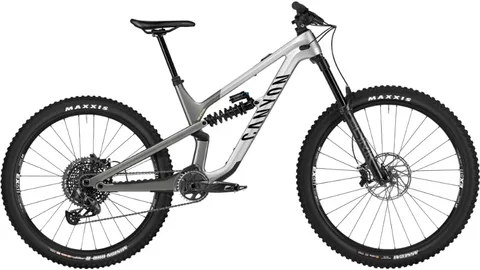
Canyon
Canyon Spectral
Trail/enduro bike with 150mm travel. Modern long geometry-many riders size down from road sizing; prioritize reach over height. Selected Amazon listing: Canyon Spectral CF 8, Reflecting Grey, Medium. This offer is size Medium, color Reflecting Grey. Check the selected variant and mounting or fit requirements before ordering; other family variants are separate listings.
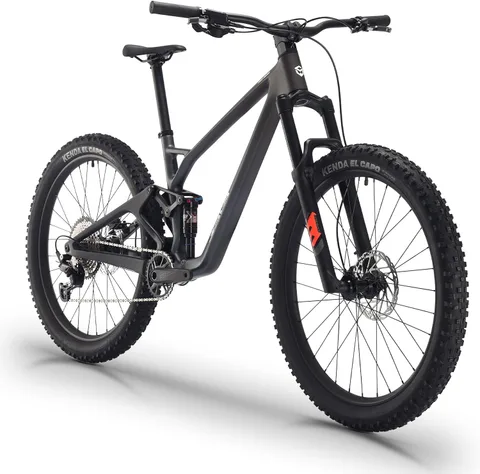
SAVADECK
SAVADECK Carbon MTB
Full-suspension carbon mountain bike with Fox front fork and Shimano Deore M6100 12-speed. The dual-link suspension system and 2.4-inch tires are built for technical trails - size based on reach preference rather than standover height.
As an Amazon Associate we earn from qualifying purchases. Purchases made through these links help support our free calculators.
Questions riders ask
Sources
- Bosch eBike Systems, Range Assistant.
- Trek Bikes, Electric mountain bike FAQ.
- Shimano, eMTB battery basics.
- Trek Bikes, electric bike range extender.
- Specialized, Turbo batteries and range extenders.
- Specialized, Turbo Levo geometry app.