Hardtail vs Full-Suspension MTB: Which Should You Choose?
Guide
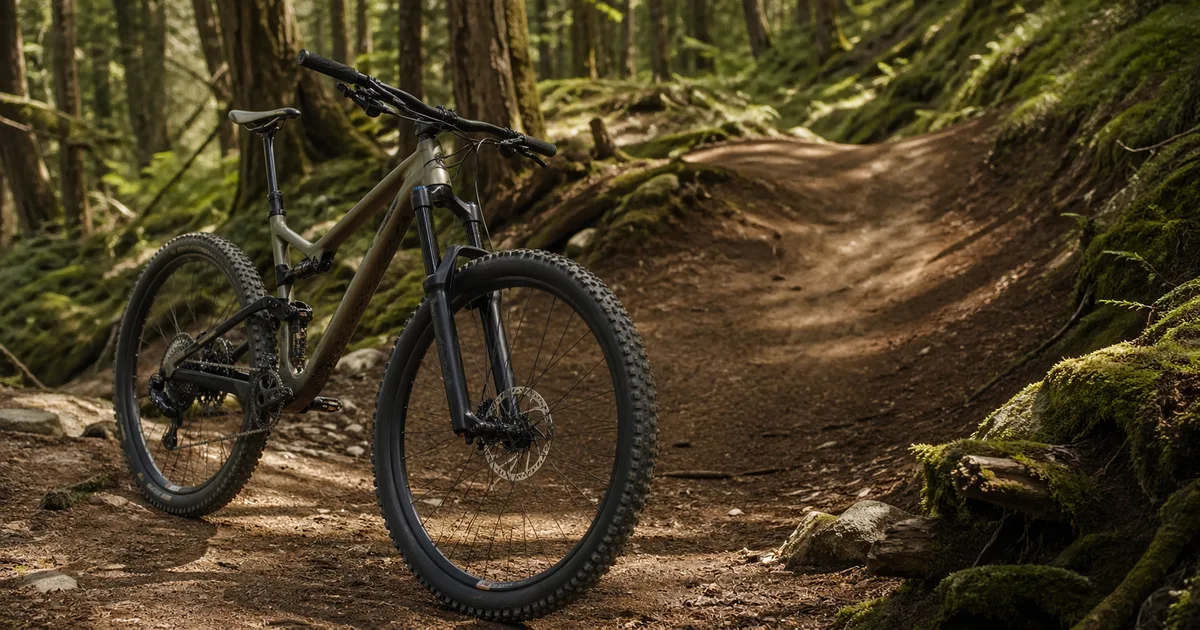
A hardtail has a suspension fork but no rear shock. A full-suspension mountain bike has both. That one difference changes what the bike costs, how much care it needs, and how it behaves when the trail turns rough. The useful question is not which design is better. It is which one fits the rides you will actually do.
Do not buy for the rider you might become three years from now. Write down your next ten realistic rides. Their terrain, speed, and repeated obstacles tell you more than the label "beginner" ever will.
Still choosing the bike category?
Use this first only if you are still comparing mountain bikes with gravel or hybrid bikes. Frame sizing comes after the suspension-platform decision.
Hardtail vs full suspension at a glance
These are leans, not guarantees. Geometry, tires, pressure, suspension setup, rider skill, and individual models can reverse a close call. The sources support the technical boundaries; the recommendation column is practical BikeSize guidance.
| Decision factor | Hardtail lean | Full-suspension lean | How to use it |
|---|---|---|---|
| Terrain | Smooth singletrack, forest roads, and flow trails | Repeated roots, rocks, drops, and rough descents | Match the bike to your normal trails, not one aspirational trip. [S3] [S6] |
| Climbing | Smooth climbs where low mass and direct pedaling matter | Test on rough or loose climbs instead of assuming | Trek supports the smooth-climb hardtail lean. Tire choice can change rough-climb grip. [S6] [S7] |
| Descending | Mellow descents where you accept more body movement | Fast, rough, repeated-impact descending | Full suspension leans toward stability through bumps and descents. [S3] [S6] |
| Comfort | Direct trail feedback on shorter or smoother rides | More isolation from repeated bumps | Treat comfort as a riding preference, not a medical claim. |
| Maintenance | No rear shock, linkage, or suspension bearings | Shock, pivots, and bearings need model-specific care | Check the exact manuals and local service options. [S4] [S5] |
| Purchase budget | A fixed budget can go further on fork, brakes, and drivetrain | Rear suspension adds hardware to the purchase | Compare complete bikes. There is no honest universal price floor. |
| Weight and transport | Stronger lean when stairs or rack limits matter | Judge the complete-bike weight | Hardtails are generally lighter, but do not assume a fixed kilogram gap. [S6] |
| Rider goals | Flow trails, skills practice, XC, and simpler ownership | Technical progression and rougher, faster trails | Terrain and ownership constraints outrank experience labels. [S2] [S4] |
| eMTB | Smoother routes, transport, and simpler upkeep | Rough-terrain comfort and stability | Compare actual system weights and never assume a battery-range winner. [S4] |
Decide by terrain first
Smooth singletrack, flow trails, and forest roads
A hardtail is often enough. It makes particular sense when your trails reward pedaling and pumping rather than absorbing one square-edge hit after another. You still need suitable geometry and tires. A hardtail with poor rubber or the wrong fit does not become efficient simply because it lacks a rear shock.
Repeated roots, rocks, drops, and rough descents
Full suspension gets the stronger lean when impacts keep coming, especially at descending speed. Trek describes full-suspension bikes as more stable through bumps and descents. Giant's trail and enduro categories also connect increasing travel with rougher, more descent-focused riding. [S3] [S6]
Rear suspension alone does not tell you what a bike is for. A short-travel XC bike, an all-round trail bike, and an enduro bike can all have rear shocks while feeling completely different.
Bike parks, enduro, or repeated large impacts
At this point, stop treating the purchase as a two-option question. Travel, geometry, brakes, tires, and riding discipline matter as much as the presence of a rear shock. A trail hardtail with a 130 mm fork may be more trail-oriented than a 100 mm XC full-suspension bike. Giant's published category ranges show why travel and intended use cannot be reduced to one binary choice. [S3]
What about climbing?
On smooth climbs
A hardtail can feel quick and direct. Trek describes hardtails as lighter, more efficient while pedaling, and faster on climbs and smooth trails. [S6] That supports a hardtail lean on firm, predictable climbs when low mass matters.
It does not prove that every hardtail climbs faster than every full-suspension bike. Complete-bike weight, geometry, gearing, tire choice, suspension design, fitness, and pace all count.
On rough or loose climbs
There is no automatic winner. Rear suspension may help a wheel track uneven ground, but the available sources do not support a universal full-suspension traction claim. Canyon notes that tires have a major effect on traction, comfort, rolling efficiency, and the bike's overall behavior. [S7]
Budget and maintenance
A hardtail has fewer expensive systems to buy and maintain. At the same purchase price, that can leave more budget for the fork, brakes, drivetrain, wheels, or tires. It does not mean every inexpensive hardtail beats every inexpensive full-suspension bike.
Inspect the bikes in front of you:
- Does the frame fit your body and intended riding position?
- Are the brakes and tires suitable for your trails?
- Can a local shop service the exact fork and rear shock?
- Are replacement derailleur hangers and pivot bearings available?
- Does a used full-suspension bike need overdue shock or pivot work?
- What does each complete bike actually weigh?
Full-suspension ownership adds rear-shock setup and service, pivot and bearing inspection, and model-specific hardware checks. Canyon asks buyers to consider suspension servicing and bearing replacement. SRAM tells owners to follow the manual for the exact component because requirements vary with the product and riding conditions. [S4] [S5]
Ignore blanket service intervals unless the number comes from the manual for the fork or shock you are buying. If the trails truly call for full suspension but the purchase leaves no money for upkeep, revisit the budget or look for a well-inspected used bike with a known service history.
Skill and riding goals
"Beginners should start on a hardtail" is too crude to guide a purchase. A hardtail can teach active line choice and body movement, but it is also a valid long-term bike for XC, flow trails, pump tracks, mixed utility riding, and anyone who values simple ownership.
Full suspension may give a new rider a more manageable introduction to rough, obstacle-filled trails. It also makes sense for someone who already has access to steeper, faster terrain. Specialized and Canyon frame the decision around intended riding rather than experience alone. [S2] [S4]
Choose for the trails you can realistically reach. Buying for an imagined expert version of yourself can make every current ride less enjoyable.
Choose a hardtail if
- Most rides are on smoother singletrack, flow trails, forest roads, or uncomplicated XC routes.
- Lower purchase cost and simpler upkeep matter more than repeated-impact comfort.
- You carry the bike upstairs or have a strict rack-weight limit.
- You enjoy a direct trail feel and active line choice.
- You want to put more of a fixed budget into brakes, tires, fork, or drivetrain.
- Your local shop can service the fork but rear-shock or pivot support is limited.
Choose full suspension if
- Your normal trails have repeated roots, rocks, drops, braking bumps, or rough descents.
- Stability over repeated impacts matters more than low weight or mechanical simplicity.
- Comfort on rough trails is a high priority.
- You expect to progress onto technical terrain and already have access to it.
- You can budget for rear-shock and pivot or bearing maintenance.
- A representative trail test shows a clear benefit over a comparable hardtail.
A nine-step decision flow
- Confirm the bike category. If fewer than half your rides use true singletrack, or you still compare MTB with gravel or hybrid, use the Bike Finder Quiz first.
- List your next ten rides. Note the surfaces, repeated obstacles, steepness, descending speed, duration, and whether you will ride an acoustic bike or eMTB.
- Set the terrain floor. Smooth and flowing trails lean hardtail. Repeated rough impacts at speed lean full suspension.
- Apply the comfort override. If repeated bumps often make you cut rides short, test a full-suspension bike. Treat this as a riding preference, not a medical diagnosis.
- Apply the ownership boundary. If you cannot budget for or arrange rear-shock and pivot care, lean hardtail unless the terrain requirement is non-negotiable.
- Adjust for eMTB use. Motor assistance makes small pedaling-mass differences less important, but transport weight, total cost, rough-terrain behavior, and service still matter.
- Escape the binary when needed. XC racing, enduro, bike parks, and repeated large impacts require a travel and discipline decision before model choice.
- Test real bikes. Compare fit, complete-bike weight, component level, local service support, tires, pressure, and behavior on representative terrain.
- Finish the journey. Once you have chosen the platform, use the Mountain Bike Size Calculator for a frame-size starting point. Then compare candidate geometry or see how two Scott cross-country platforms differ.
Sizing and fit implications
Choosing the suspension platform does not choose the frame size. Hardtails and full-suspension bikes from the same brand can have different reach, stack, wheelbase, standover, seat-tube angle, and riding position. Size labels do not transfer reliably between models.
Rear-suspension sag also changes how a full-suspension bike sits under the rider. A hardtail has fork sag, but its rear triangle does not settle through travel. Judge the cockpit with the suspension set for your weight, not while the bike is fully extended on a showroom floor.
- Start with the manufacturer's size chart.
- Compare reach and stack instead of relying only on S, M, or L.
- Confirm standover clearance while wearing riding shoes.
- Set suspension sag before judging the cockpit.
- Check seated climbing comfort and standing room.
- Do not size up simply to make the bike more capable.
- Do not size down simply to make a heavy bike feel smaller.
Once you choose the platform, use the Mountain Bike Size Calculator. Then read the Mountain Bike Sizing Guide and compare candidates with the Reach and Stack Calculator or Geometry Comparison.
Buying checklist
Terrain and purpose
- Base the decision on your next ten realistic rides.
- Know whether you need XC, trail, enduro, downhill, or mixed use.
- Keep suspension travel separate from the platform decision.
- Test rough-climbing grip instead of assuming a winner.
Fit and setup
- Check the frame against your height, inseam, and proportions.
- Confirm reach, stack, and standover.
- Set sag before the test ride.
- Use comparable tire tread and pressure when comparing bikes.
- Check seated climbing comfort and standing clearance.
Bike and ownership
- Check complete-bike weight rather than category assumptions.
- Match the brakes, tires, fork, and gearing to your terrain.
- Inspect a used bike for shock leaks, pivot play, and bearing noise.
- Confirm replacement hangers, bearings, and service are available.
- Leave room in the budget for setup, protection, and maintenance.
For pressure setup, use the Tire Pressure Calculator and MTB Tire Pressure Guide. For the wider upkeep schedule, see Bike Maintenance Basics.
Hardtail vs full-suspension questions
The bottom line
Choose a hardtail when your real trails are smoother and you value a direct ride, lower weight, lower cost, or simpler maintenance. Choose full suspension when repeated rough impacts and descending stability justify the extra hardware and upkeep.
If the choice is close, compare two well-fitting bikes on representative terrain. Match the tires and pressure, set the suspension correctly, and pay attention to your hardest normal climb and descent. That test is worth more than a blanket rule.
Sources
These manufacturer and component sources were checked on August 23, 2026. They are commercially interested, so this guide uses them for attributed technical claims and category boundaries, not brand rankings.
- Specialized, Mountain Bike Buyer's Guide. Used for intended-riding distinctions across MTB categories.
- Giant, cross-country, trail, and enduro category explainers. Used for terrain and travel boundaries.
- Canyon, Hardtail vs full-suspension e-MTB. Used for ride-first eMTB and ownership questions.
- SRAM, RockShox service documentation. Used for model-specific suspension service guidance.
- Trek, Hardtail vs Full Suspension: Which MTB is Right for You?. Used for smooth-trail efficiency, weight, maintenance, obstacles, bumps, and descending.
- Canyon, Hardtail mountain bike buyer's guide. Used for the effect of tire choice on traction, comfort, and rolling behavior.