Best Bikes for Kids 2026 - Top Picks by Age & Inseam
Guide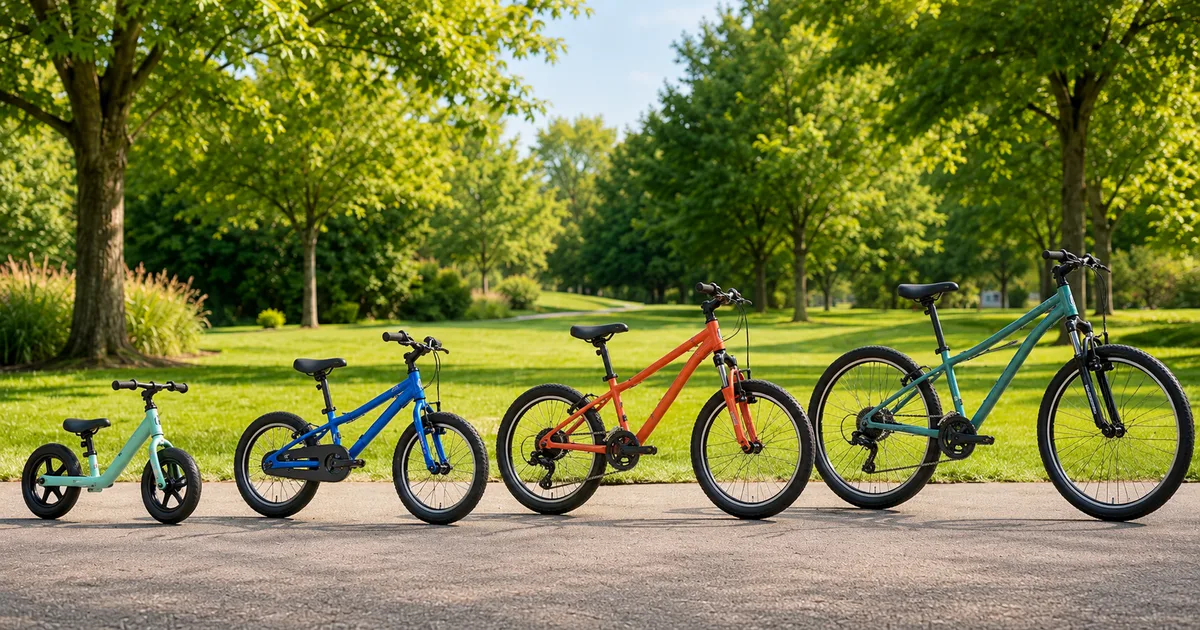
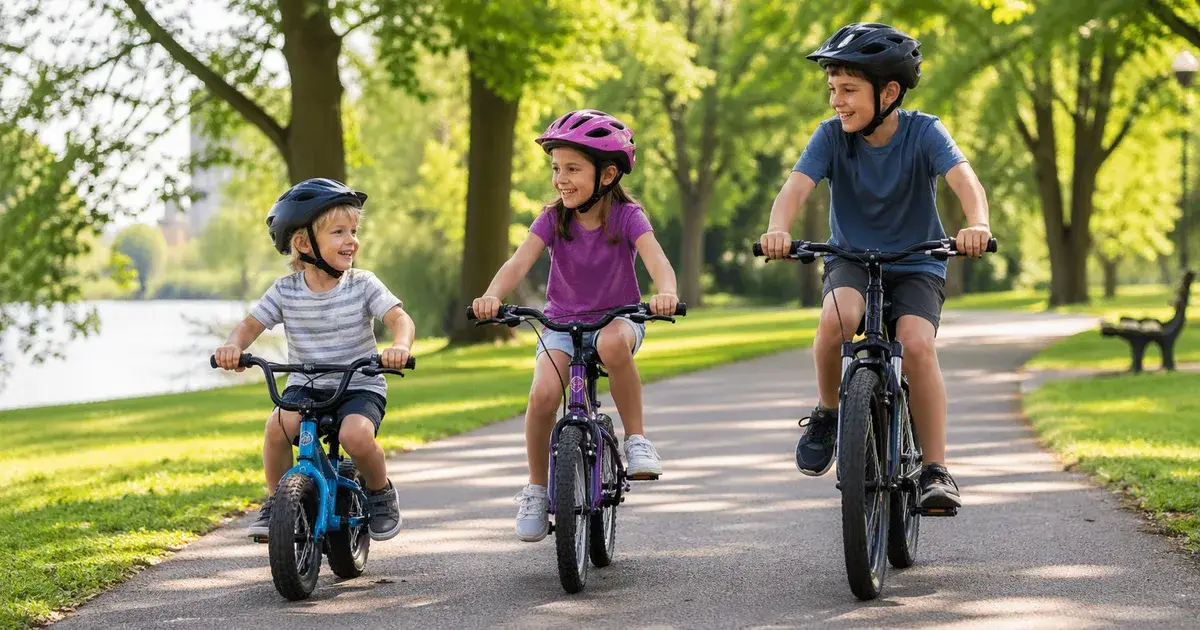
The best kids bike isn't the one with the loudest paint job - it's the one your child will actually ride. After fifteen-plus years of putting kids on bikes, the pattern is unmistakable: the bikes that get ridden are light, correctly sized, and built with components scaled to small hands and short legs. Everything else gathers dust in the garage.
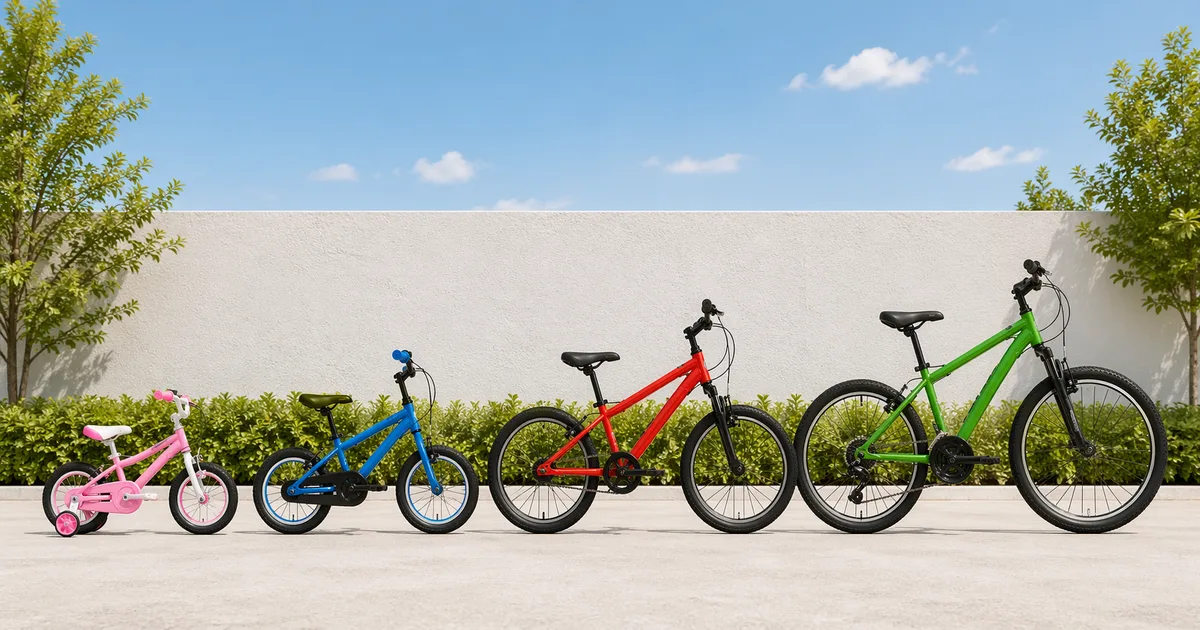
This 2026 guide is organised the way kids actually grow - by wheel diameter, from a first balance bike to a 24" trail-ready rig. For each stage we cover what to look for (weight, geometry, brakes, gearing), the picks we'd hand to a friend, and the tradeoffs between premium and value brands. Pair it with our Kids Bike Size Calculator and the deeper Kids Bike Sizing Guide before you buy.
The 30-second answer
For most families, a Woom (1 through 5) hits the best balance of weight, geometry, and resale value. If you want the bike shop down the road, a Specialized Riprock or Specialized Jett in 16/20/24" is the safest mainstream pick. On a tight budget, a Schwinn or Royalbaby 16" or 20" is fine for occasional riding.
Top kids bike picks at a glance
Check Amazon for current pricing and availability - we earn a small commission at no extra cost to you.
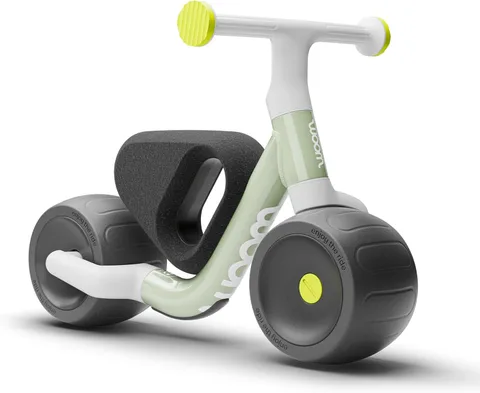
Woom
Woom Wow
12-inch balance bike for ages 9 to 36 months (height 27"-39"). No-pedal design with a 6 lb aluminum frame, self-centering steering, and silent gliding wheels. Saddle 10.5". Includes a Buddy plush toy.
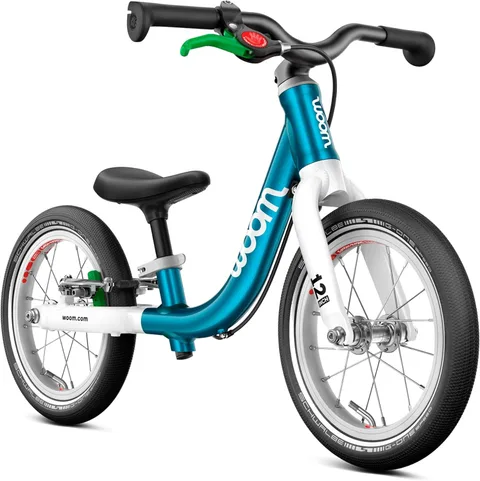
Woom
Woom GO 1
12-inch balance bike for toddlers 18 months to 3.5 years (inseam 10.0"-14.4", height 31"-40"). Weighs 6.4 lbs. Saddle 10.4"-14.4". Hand brake teaches early stopping; steering limiter prevents oversteering.
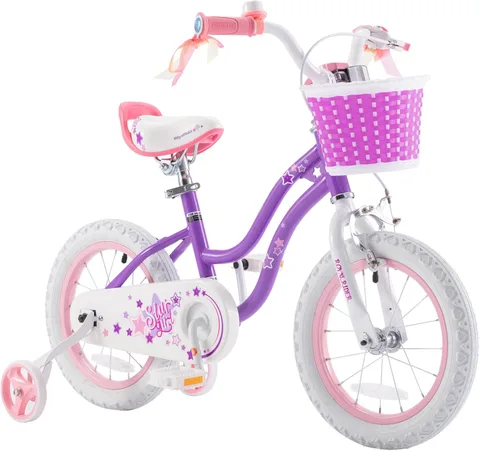
RoyalBaby
RoyalBaby Stargirl 12
12-inch first bike for girls ages 3-5 (height ~85-105 cm / 33-41"). Lowered step-through frame, training wheels, hand + coaster brakes, basket and bell included. Sparkly Stargirl decals.
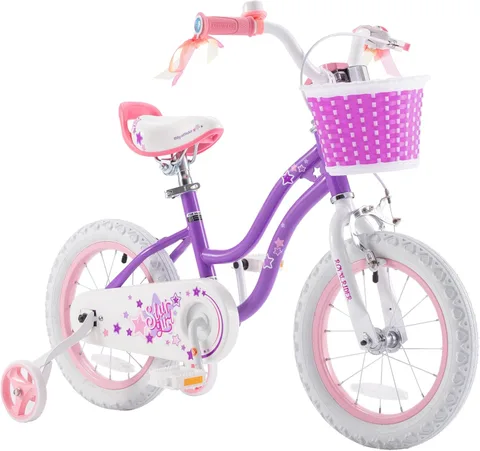
RoyalBaby
RoyalBaby Stargirl 14
14-inch step-through girls bike for ages 3-5 (height ~95-115 cm). Hand + coaster brakes, training wheels, sparkle Stargirl theme with handlebar bell. Adjustable seat extends usable years to age 13.
Schwinn
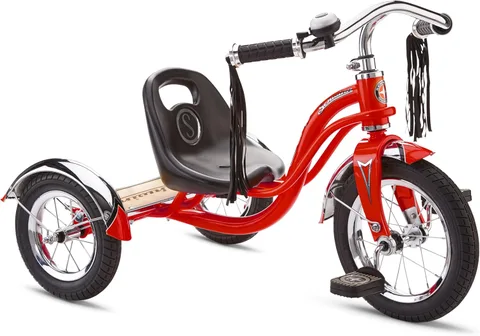
Schwinn Roadster Tricycle
Retro 12-inch front-wheel tricycle for kids ages 2-4 (29"-37" tall). Low center of gravity with adjustable five-position seat that grows with the child. Steel frame, chrome fenders, real wood deck and mustache handlebars.
AVASTA
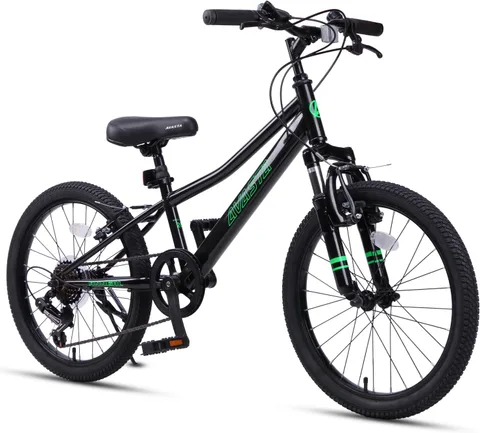
AVASTA Govet 20" Kids Mountain Bike
20" wheel youth mountain bike for ages 6-12 (45-59" tall) with a steel frame, suspension fork, 6-speed Shimano TX30/TZ500 drivetrain, and dual hand-operated V-brakes. A real geared kids' MTB rather than a single-speed cruiser - good first multi-speed bike for older kids riding mixed pavement and trails.
As an Amazon Associate we earn from qualifying purchases. Purchases made through these links help support our free calculators.
Table of contents
- What makes a great kids bike
- Stage 1: Balance bikes (12")
- Stage 2: First pedal bikes (12"-14")
- Stage 3: 16" bikes (ages 4-6)
- Stage 4: 20" bikes (ages 6-9)
- Stage 5: 24" bikes (ages 8-12)
- Fit now vs. growing into it
- FAQ
What makes a great kids bike
Four things separate a bike a kid will actually ride from a bike that becomes a coat rack. None of them are about colour.
Weight (the only spec that matters)
A common big-box 16" bike weighs 22-24 lb. A premium 16" - Woom 3, Prevelo Alpha Two, Cleary Hedgehog - weighs 13-15 lb. Your 5-year-old weighs about 40 lb. The big-box bike is more than half their bodyweight; the premium bike is a third. Hills, curbs, and turns suddenly become possible. If you change one variable, change weight.
Geometry scaled to a child
Quality kids bikes use shorter cranks (89-127 mm depending on wheel size), narrow Q-factor (so knees don't bow), low standover, and a relaxed head tube angle for stability. Big-box bikes shrink an adult bike - same long cranks, same wide pedals, same twitchy steering. The result is a bike that fights the rider.
Brakes a small hand can squeeze
Look for short-reach levers (sometimes labelled “youth reach”) and dual hand brakes. Avoid bikes with only a coaster brake on 16" and up - your child needs to learn to coast and modulate, not pedal backwards in a panic. Test in the shop: your child should be able to squeeze the lever to the bar one-handed without straining.
Air tyres, not foam
Pneumatic (air) tyres roll faster and absorb chatter that beats up little bodies. Foam tyres are heavier, slower, and feel dead. Skip any bike with foam tyres past the balance-bike stage.
Stage 1: Balance bikes (ages 18 months-4)
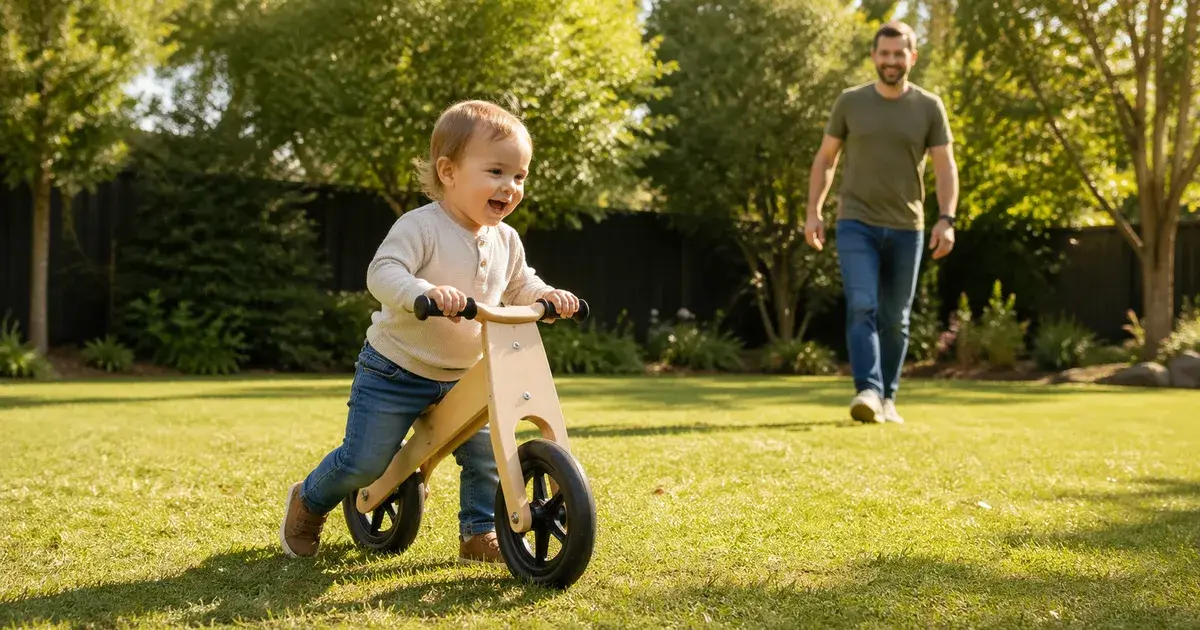
A balance bike is a low-slung pedal-less bike that lets a toddler scoot, glide, and learn to balance without the cognitive load of pedalling. It is the single fastest path from “can't ride” to “rides independently.” If you take only one piece of advice from this article: skip training wheels, start with a balance bike.
What to look for
- Weight: under 8 lb. The Strider Sport (6.7 lb) and Woom 1 (6.6 lb) are the gold standards.
- Inseam fit: minimum saddle height should be ~2.5 cm below your child's inseam so both feet plant flat with knees slightly bent.
- Air tyres: Strider Sport and Woom 1 both use real air tyres. Avoid foam.
- A hand brake (optional but ideal): Woom 1 ships with a rear hand brake from day one - useful for transitioning to a pedal bike.
Top picks for 2026
- Woom 1 - best overall. Light, geometry that grows with the child, hand brake included. Resells for 60-70% of MSRP.
- Strider 12 Sport - best value. Bombproof, available everywhere, and the bike most balance-bike races use.
- Specialized Hotwalk - sold at local Specialized dealers, great if you want to test in person.
Stage 2: First pedal bikes (12"-14" wheels)
This is the bike a 3-5 year old graduates to from a balance bike. The priorities are weight (so they can muscle it around) and proper hand brakes (so they don't learn to slam coasters in panic). Most kids skip 12" pedal bikes entirely if they've had a balance bike - a 14" or even 16" is often the right next step.
What to look for
- Total weight under 15 lb.
- Dual hand brakes with short-reach levers.
- Removable training wheels (for the rare child who needs a temporary bridge).
- Adjustable seatpost with at least 12 cm of range.
Top picks for 2026
- Woom 2 (14") - 11.7 lb, hand brakes only, gyro-style training wheels available. The bike most premium-brand buyers start with.
- Prevelo Alpha One (14") - 12.5 lb, similar philosophy to Woom with slightly more aggressive geometry.
- Specialized Jett 12 / 16 - local-shop alternative with excellent fit and a real warranty channel.
Stage 3: 16" bikes (ages 4-6)
16" is the wheel size where most kids are riding independently and starting to do real distance - neighbourhood loops, the school commute, a trip to the park. This is also where the gap between premium and big-box bikes becomes painfully obvious. A 14-lb premium 16" vs. a 24-lb big-box 16" is the difference between a kid who keeps riding and a kid who quits.
What to look for
- Weight under 17 lb (premium) or under 22 lb (mainstream).
- Dual hand brakes; coaster brake disconnected or absent.
- Single-speed only - gears at this stage are a distraction.
- Standover at least 4 cm below your child's inseam.
Top picks for 2026
- Woom 3 (16") - 13.4 lb, hand brakes, the bike to beat at this size.
- Specialized Jett 16 - best LBS pick. Around 16 lb, excellent geometry, and you can test fit at any Specialized dealer.
- Cannondale Kids Trail 16 - sturdy, knobby tyres for mixed surfaces, available through Cannondale shops with their kids size chart on the BikeSize site.
- Schwinn Koen 16 - best budget pick at $150-180. Heavier than premium, but solidly built and easy to find.
Stage 4: 20" bikes (ages 6-9)
At 20", geared bikes start to make sense - but only if your child rides real hills or longer distances. For most flat-suburb kids, a single-speed 20" is lighter, simpler, and more fun. If you do go geared, look for a 1x7 or 1x8 with a friction-free thumb shifter or grip shift. Avoid front derailleurs at all costs.
What to look for
- Single-speed: under 19 lb (premium) or under 24 lb (mainstream).
- Geared: 1x7 or 1x8 only. Friction-free shifter.
- Linear-pull or disc brakes; short-reach levers; no coaster brake.
- Quick-release seat clamp so the post can come up monthly as they grow.
Top picks for 2026
- Woom 4 (20", 1x8) - 16.5 lb, simple drivetrain, confidence-inspiring geometry. The all-rounder.
- Specialized Jett 20 - 1x9, around 19 lb, best LBS option for kids who'll ride trails too.
- Specialized Riprock 20 - small-MTB option for kids who want to ride dirt; suspension fork, knobby tyres.
- Trek Precaliber 20 - wide availability through Trek dealers; see our Trek size chart for the size break.
- Cannondale Quick Kids 20 - fast urban geometry, good for kids who keep up with parents on neighbourhood rides.
Stage 5: 24" bikes (ages 8-12)
24" is the last kid-specific size before your child moves to a small adult frame (XS or S, depending on brand and category). At this stage, bikes split into two real categories: lightweight road/hybrid bikes for kids who ride with parents, and proper hardtail mountain bikes for kids who ride trails. Single-speed 24" bikes still exist but make sense only for very flat areas.
What to look for
- Hybrid/road kids: 1x8 or 1x9, slick or semi-slick tyres, rim or mechanical disc brakes, under 22 lb.
- MTB kids: air-sprung or quality coil fork (avoid the cheap unsprung “suspension” forks on big-box bikes), 1x8/1x9, mechanical disc brakes, knobby 24" tyres.
- Standover at least 5 cm below inseam - they will jump off at the lights.
Top picks for 2026
- Woom 5 (24") - 19 lb, 1x8, the gold-standard urban/road kids bike.
- Specialized Riprock 24 - proper hardtail with air-sprung fork; the bike to buy if your kid is into trails.
- Specialized Jett 24 - versatile 1x9 that handles paths, mild trails, and pavement.
- Trek Precaliber 24 - well-supported through Trek dealers; check fit against the Trek size chart.
- Cannondale Trail 24 - capable trail rig at a friendlier price than the Riprock.
Shop the picks above
Affiliate links - they cost you nothing and help keep BikeSize free.
Woom
Woom Wow
12-inch balance bike for ages 9 to 36 months (height 27"-39"). No-pedal design with a 6 lb aluminum frame, self-centering steering, and silent gliding wheels. Saddle 10.5". Includes a Buddy plush toy.
Woom
Woom GO 1
12-inch balance bike for toddlers 18 months to 3.5 years (inseam 10.0"-14.4", height 31"-40"). Weighs 6.4 lbs. Saddle 10.4"-14.4". Hand brake teaches early stopping; steering limiter prevents oversteering.
RoyalBaby
RoyalBaby Stargirl 12
12-inch first bike for girls ages 3-5 (height ~85-105 cm / 33-41"). Lowered step-through frame, training wheels, hand + coaster brakes, basket and bell included. Sparkly Stargirl decals.
RoyalBaby
RoyalBaby Stargirl 14
14-inch step-through girls bike for ages 3-5 (height ~95-115 cm). Hand + coaster brakes, training wheels, sparkle Stargirl theme with handlebar bell. Adjustable seat extends usable years to age 13.
Schwinn
Schwinn Roadster Tricycle
Retro 12-inch front-wheel tricycle for kids ages 2-4 (29"-37" tall). Low center of gravity with adjustable five-position seat that grows with the child. Steel frame, chrome fenders, real wood deck and mustache handlebars.
AVASTA
AVASTA Govet 20" Kids Mountain Bike
20" wheel youth mountain bike for ages 6-12 (45-59" tall) with a steel frame, suspension fork, 6-speed Shimano TX30/TZ500 drivetrain, and dual hand-operated V-brakes. A real geared kids' MTB rather than a single-speed cruiser - good first multi-speed bike for older kids riding mixed pavement and trails.
As an Amazon Associate we earn from qualifying purchases. Purchases made through these links help support our free calculators.
Buying a helmet, lights, or pads at the same time? The BikeSize shop keeps kids bikes and the gear they need on one page.
Fit now vs. growing into it
Sizing up “so they can grow into it” is the most expensive mistake parents make. A bike that fits next year is too long this year - the brakes are out of reach, the standover is dangerous, and your child won't ride it. Then you wait six to twelve months for them to grow into it, by which time the bike has been outside in the rain and the chain is rusted. You've burnt a season of riding.
The smarter play: buy the size that fits today, raise the seatpost monthly, and resell on Facebook Marketplace, Pinkbike Buy/Sell, or your local cycling club when they outgrow it. Premium kids bikes (Woom, Prevelo, Cleary, Early Rider) routinely resell for 60-80% of MSRP if you keep them clean and indoors. Net cost is often $80-150 per year per size - cheaper than the dust-collecting too-big bike.
Use the Kids Bike Size Calculator with current measurements (re-measure inseam every 3-4 months - kids grow in spurts), and check standover against the height range in our brand size charts: Specialized, Trek, Cannondale, Woom, Schwinn, and Royalbaby.
Tools to confirm the size before you buy
Two minutes with these calculators saves a return shipment and a disappointed child.
Enter age, height, and inseam to get a 12", 14", 16", 20", or 24" recommendation
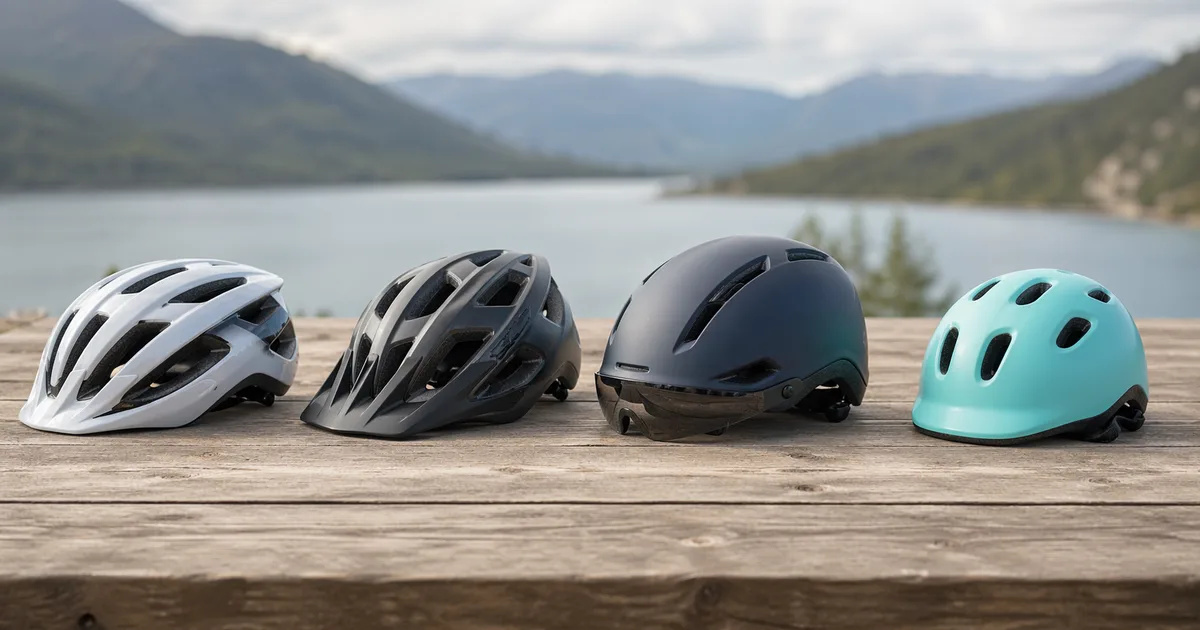
A helmet that slides around is worse than no helmet - get the number before you shop
Set the seat for the first ride and the next four growth spurts
Palms hit the ground first - gloves keep the learning session going
Frequently asked questions
The bottom line
Buy light, buy the size that fits today, and skip training wheels. If your budget allows, a Woom or Prevelo at the right wheel size is the single best gift you can give a child who's ready to ride. If it doesn't, a Specialized Jett or a well-chosen Schwinn beats a heavy big-box bike every time. Then size the helmet, the gloves, and the pads - see our Best Accessories for Kids 2026 for the gear list - and go ride. Before that first lap around the block, take five minutes to read up on the child cycling laws and state helmet laws in your area - sidewalk-riding age limits and helmet age cutoffs vary widely.
Related Calculators & Tools
Enter age, height, and inseam for a personalized wheel-size recommendation
Match head circumference to brand helmet sizes
Protect little hands during the inevitable first tumbles
Set the seat for confidence on the first ride and growth later