Bicycle rolling resistance: tires, pressure and real roads
GuideUse your load, tire width and terrain, then check component approvals.
Bicycle rolling resistance is the energy cost of a tire rolling under load, mainly because its materials lose energy as they flex. On real roads, vibration adds another cost. Choose a tire and pressure for your load and surface, rather than chasing the highest or lowest pressure you can run.
Looking for the testing database? BicycleRollingResistance.com is a separate tire-testing website. This BikeSize guide explains the physics and how to use it when setting up your bike. It contains no original tire tests or measured tire rankings. For inflation steps, start with the bike tire pressure guide.
Why a tire loses energy when it bends
Watch where a loaded tire meets the ground: it flattens into a contact patch. Each part of the tire bends as it enters that patch, then returns toward its original shape as it leaves. The casing is the fabric structure beneath the tread. Both that structure and the rubber deform on every revolution.
Those materials do not return all the energy used to deform them. The lost energy becomes heat, a process called hysteresis. This is why a tire can lose power even when it grips the road without sliding. Schwalbe's rolling-resistance explanation identifies repeated deformation as the main cause and describes how construction, tread and inflation affect it.
A wheel spinning freely in a workstand tells you little about this loss: the tire is not supporting the bike on the road. If your bike suddenly feels harder to pedal, also check brake rub and mechanical faults using the pre-ride safety check and basic maintenance guide. A tire purchase will not fix a dragging brake.
Pressure: smooth rollers and rough roads are different
On a smooth, hard surface, increasing pressure generally reduces tire deflection and casing losses over the normal operating range. That explains why high pressure can look good in a drum test. It does not mean pumping to the sidewall maximum is the fastest road setup.
A road has joints, coarse aggregate and potholes. A very firm tire transmits more of those disturbances into the bike and rider. Some of that motion is dissipated rather than recovered as forward movement. These rough-surface losses are often called impedance or suspension losses. SILCA's field-testing discussion separates them from casing losses and explains why road results can diverge from drum results above a setup-specific pressure.
Reducing pressure can help a tire follow roughness instead of jolting the rider over it. Keep reducing it, though, and the tire flexes more, handling can become vague, and impacts can reach the rim. Tubes can pinch; tubeless systems can lose air if the bead seal is disturbed. Lower pressure is not an unlimited route to lower resistance.
Find a usable pressure, not a magic number
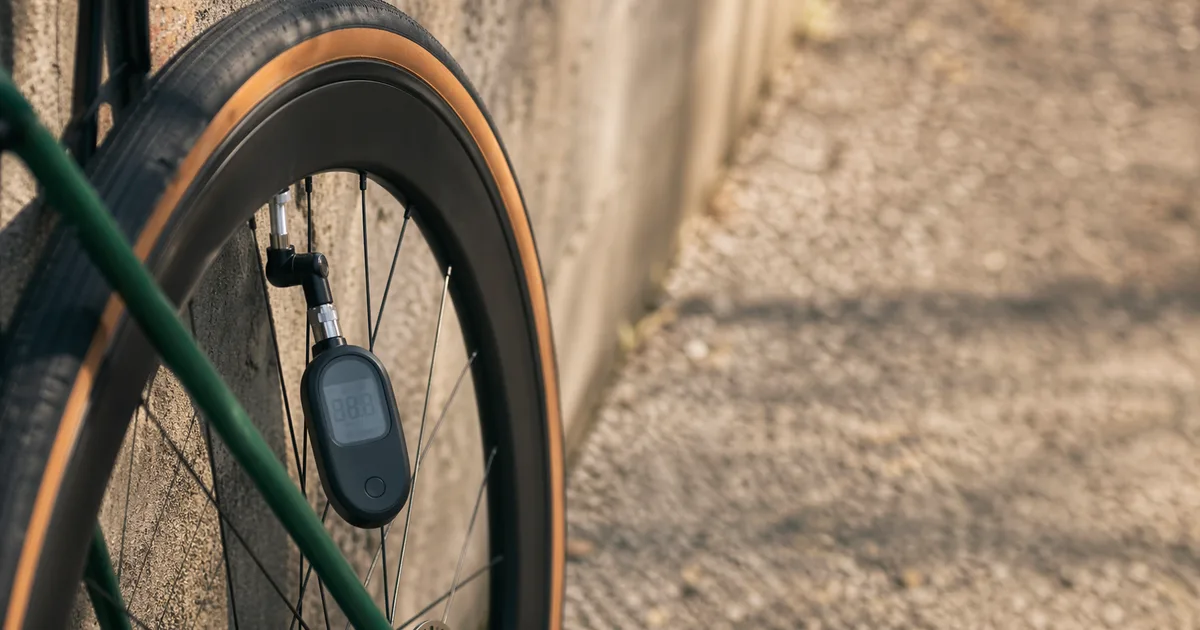
Start with the tire pressure calculator, then follow the approved tire/rim pairing and all applicable manufacturer pressure limits. A calculator is not a compatibility approval. Hookless systems need explicit tire approval and model-specific limits; there is no single pressure rule for every wheel.
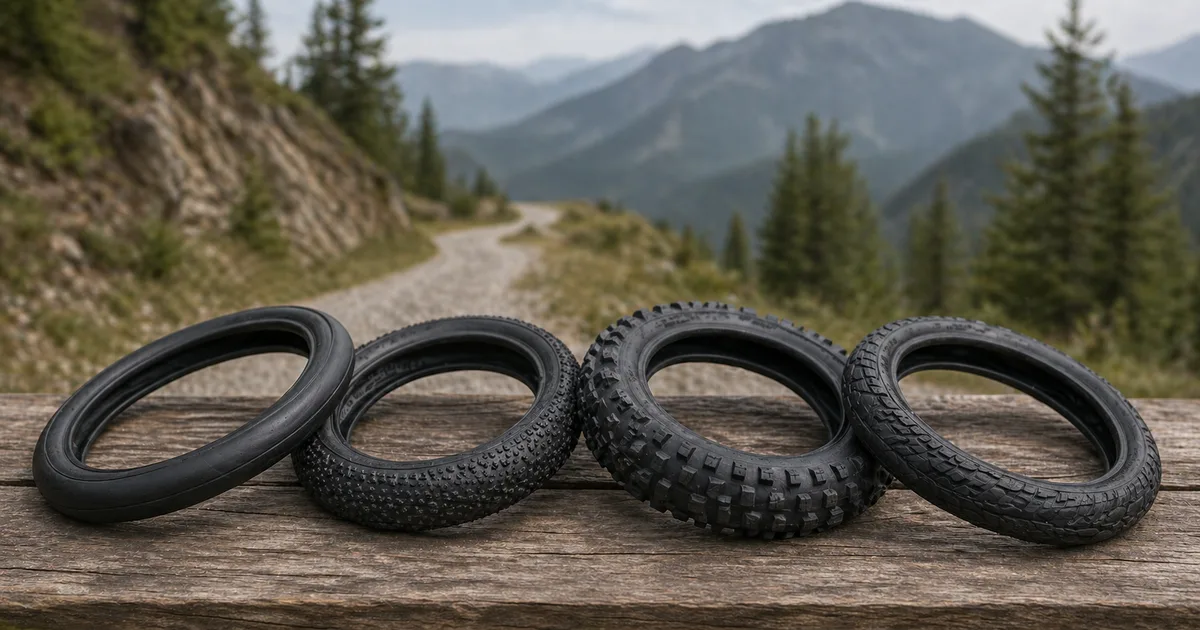
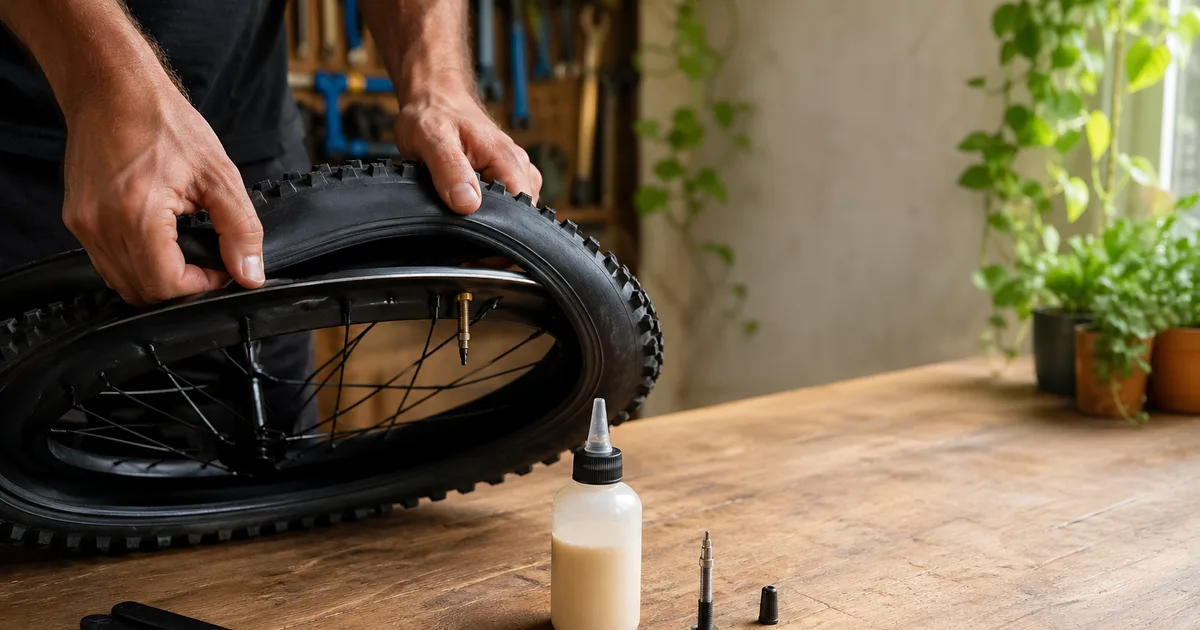
Trail riding adds traction and impact protection to the decision. Use the mountain bike pressure guide for that context. For a change to tubeless, read the tubeless setup guide before buying parts or removing a tube.
Width, casing, compound and tread work together
Width alone cannot rank tires. At the same load and pressure, a wider tire generally has a shorter, wider contact patch than a narrow one. Schwalbe uses this difference to explain why wider tires can have lower rolling resistance in an equal-pressure comparison. In practice, riders usually choose different pressures for different widths. Equal pressure, equal deflection and equal comfort are different comparisons.
Construction can outweigh a small width difference. A flexible casing and low-loss rubber can reduce the energy dissipated with each revolution. More protective material or thick tread changes how much material must flex. Tall tread blocks also deform, although their grip may be exactly what a loose trail needs. Compound behavior matters; softness or a high thread count alone does not establish a tire's rolling efficiency.
Choose enough grip and protection for the ride before chasing a low watt figure. Our bike tire buying guide helps compare riding categories and practical trade-offs; it is not a laboratory speed ranking. Check size terminology with the wheel and tire size tool, then confirm tire/rim compatibility and frame clearance with the manufacturers. A matching diameter alone does not approve the whole combination.
At higher road speeds, the tire and rim's aerodynamic interaction also matters. A wider tire that rolls well is not automatically the lowest-total-power choice. Keep rolling loss separate from air drag when comparing setups.
How rolling resistance becomes watts
Rolling power equals resisting force multiplied by ground speed. For steady travel on level ground, a simple model is P = Crr × m × g × v. Here P is rolling power in watts, Crr is a dimensionless rolling-resistance coefficient, m is total mass in kilograms, g is gravitational acceleration in meters per second squared, and v is ground speed in meters per second.
This treats the combined normal load on both tires as m × g and assumes the same constant Crr at both wheels. With different coefficients, calculate each wheel's resistance from its own load and add the two. On slopes, normal load changes. Real tire behavior also varies with pressure, load, surface, temperature and speed.
Illustrative calculation, not a tire test
Assume 85 kg for rider, bike and all luggage, a speed of 30 km/h (30 ÷ 3.6 ≈ 8.333 m/s), g = 9.81 m/s² and an assumed Crr of 0.005. Rolling power is 0.005 × 85 × 9.81 × (30 ÷ 3.6) ≈ 34.7 W for both tires together.
The coefficient is chosen only to demonstrate the arithmetic. This is not a measured result for any tire or a prediction of savings. It excludes aerodynamic drag, climbing, acceleration, drivetrain losses and additional rough-road impedance. Required pedal power will therefore differ.
Under those fixed-coefficient assumptions, rolling power increases linearly with mass and ground speed. Do not confuse that with total cycling power. Use the cycling power estimator to explore a broader power budget, and treat its results as model estimates rather than measurements of your tires.
Read lab results without overpromising road speed
A controlled test can isolate tire differences much better than a casual ride. Before comparing figures, check the exact model and casing version, measured width, rim, pressure, load, speed, temperature, and tube or sealant setup. Also check whether the result covers one tire or a pair.
For example, BicycleRollingResistance's test-method page explicitly describes its figures as single-tire results under specified conditions. Read that protocol alongside any result. Do not assume a figure already represents your complete bicycle or simply double it for a different load and speed.
Drum curvature and texture are not identical to your road. Nor does a drum reproduce a rider absorbing repeated bumps. Use controlled tests to narrow a shortlist, then weigh grip, durability, fit and pressure requirements. A small laboratory difference is not a guaranteed road saving.
What to do before buying different tires
- Inspect the current tires for damage, verify their compatibility and check pressure with a consistent gauge. If you need one, compare valve compatibility and gauge readability in the bike pump buying guide.
- Record total riding load and tire width on your rim. Start within the manufacturers' approved operating range, accounting for the load on each wheel rather than assuming equal front and rear loads.
- Make small pressure adjustments on a familiar, safe route. Compare comfort and control with the same gauge and similar conditions. Stop to inspect any squirm, rim contact or air loss rather than continuing to experiment.
- Do not label a quieter or softer ride a measured watt saving. Wind, posture, traffic and temperature can overwhelm small tire differences in an informal comparison.
Carry a suitable repair kit and know how to fix a flat tire. If pressures that feel stable still produce a harsh ride, reconsider tire volume and construction instead of going outside the approved limits.
Rolling resistance questions
Sources and scope
- Schwalbe: rolling resistance explains deformation, construction, tread and the equal-pressure width comparison.
- SILCA: rolling resistance and impedance describes casing losses and manufacturer field research on pressure and surface roughness. Its particular test setup is not a universal pressure prescription.
- BicycleRollingResistance: test information documents its own laboratory protocol and single-tire reporting. No test tables, rankings or graphics are reproduced here.
Published November 10, 2026. This is a sourced explanation with a hypothetical physics example, not a report of BikeSize tire testing.